Summer’s winding down, and if you’ve been thinking about selling, you might be wondering if you missed your chance. Better to wait until next year or even next spring, right?
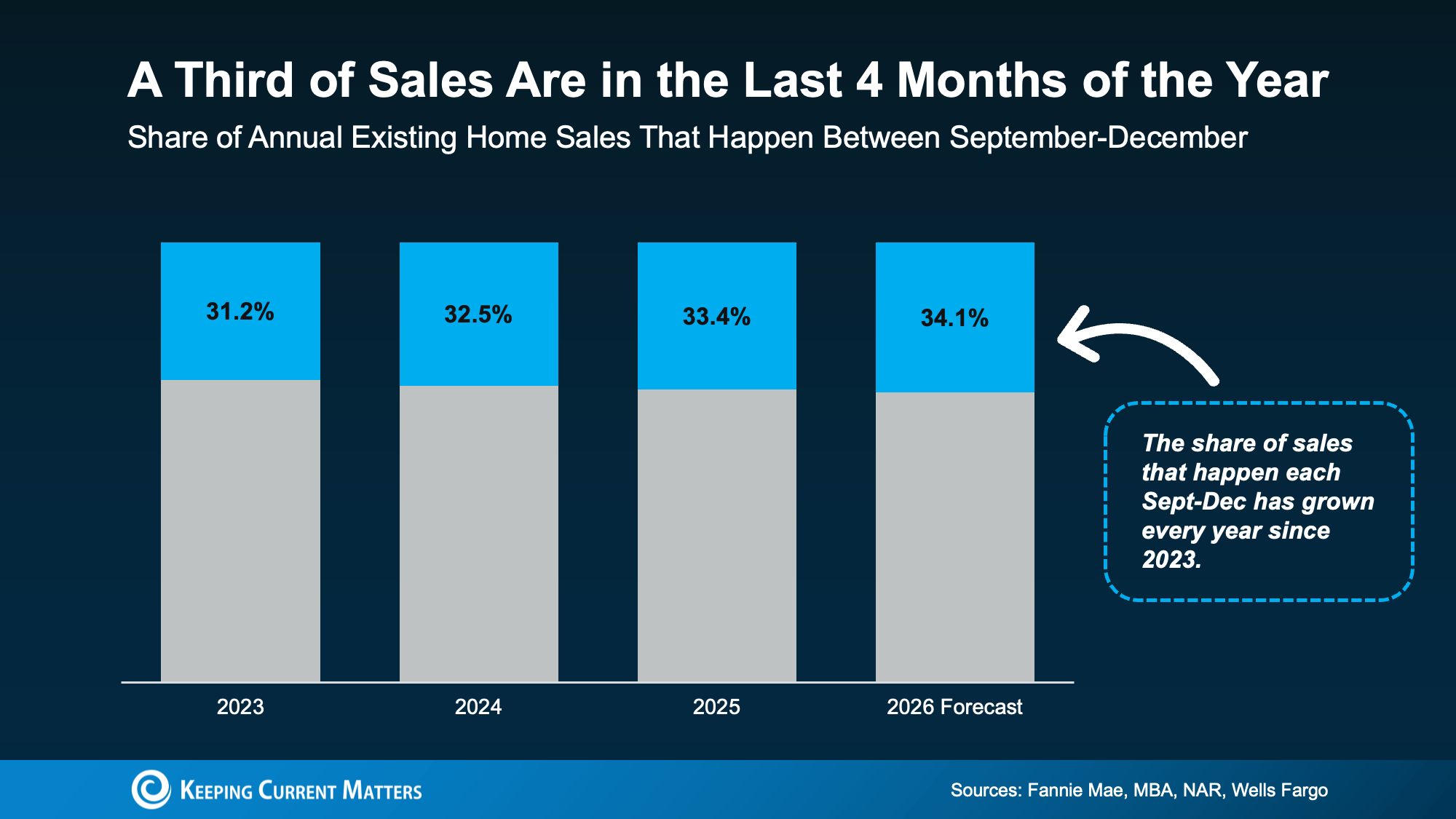
Not so fast. About one in three of all home sales happen in the last four months of the year.
Fall Is Busier than You Think
Data from the National Association of Realtors (NAR) shows around a third of existing home sales happen in the final four months of the year. And that share has grown every year since 2023 (see graph below):
Here’s What That Means for You
According to forecasts from Fannie Mae, the Mortgage Bankers Association (MBA), NAR, and Wells Fargo, there will be about 4.16 million existing home sales this year. Based on how many sales have happened so far, that means roughly 1.4 million sales are expected between now and December.
That’s about 11,800 houses selling every single day this fall.
So, the market isn’t frozen and you don’t need to put your plans on ice either. Yes, higher rates are keeping some buyers on the sidelines. But hold out for next spring, and you’ll sit out months when other serious buyers are ready to move before the new year.
How do you get in front of those buyers who are still out there looking right now? Getting your house sold this season comes down to how well it’s priced and presented, and that’s where a local agent shines.
A good agent knows what buyers in your area want right now, prices your house to match this fall’s market, and positions it to stand out to the serious buyers shopping before year-end. From the first photo to the final offer, they handle the details that turn your house on the market into one of the 11,800 selling every day.
Bottom Line
Listing this fall doesn’t mean your house will sit on the market until spring. Buyers are out there right now, ready to make a move before the new year – and your window is still open.
To make yours one of the homes that sells this season, connect with a local real estate agent.
Shockingly high asking rents and low inventory likely discouraged many Manhattan and Brooklyn renters from making a move last month.
New lease signings in both boroughs plunged in August, indicating that many chose to renew their leases instead, according to latest edition of The Real Deal Rental Report by Jonathan Miller.
In Manhattan, rents continued to rise at almost double the rate of inflation, Miller said. Median rent increased by 6.5 percent to $4,900 compared to August 2025, the report said, while the U.S. Consumer Price Index inflation rate for August is expected to be 3.6 percent. The result: Renters signing new leases are seeing housing costs eat up a disproportionate share of their income.
However, Manhattan median rent was down 2 percent compared to July, when median rent was $5,000, a record high. But that probably was no consolation since Manhattan listings dropped dramatically last month, limiting options for renters. They were down 45.3 percent compared to the same month last year, the steepest drop in more than three years, Miller’s report said.
Bidding wars for Manhattan rentals
Fierce competition for rentals means some renters will offer to pay more than landlords are asking. More than one in five rentals went for more than the asking rent.
Median rent for luxury apartments in Manhattan was the third-highest on record at $12,823, an increase of 22.1 percent over August 2025, a much high rate than the overall market.
Brooklyn listings fall 34 percent
In Brooklyn, all the ways to measure rents showed increases last month. Median rent was $4,000, reflecting an increase of 1.3 percent from a year ago, but a drop of 11.1 percent from July, when median rent was $4,500, so renters signing new leases caught a small break.
Like the Manhattan market, nearly one in five Brooklyn rentals went for more than the asking rent, Miller said.
Brooklyn listings were down 33.9 percent, limiting options for renters, and lease signings dropped 27.9 percent as a high proportion of renters opted to renew leases and stay in place.
Median rent for luxury Brooklyn rentals, representing the top 10 percent of the market, rose 10.8 percent to $8,200, the report said.
More freebies in August
Along with slightly lower rents, landlords sweetened leases a little more in August. Nearly 17 percent of August listings came with a concession, compared to 9.7 percent the month before, according to a New York City rental market report from apartment listings and review platform openigloo.
The report also offers snapshots of open violations, renewals above the Good Cause rent threshold, and tenant ratings in addition to citywide median rent trends.
In August, a typical concession was $482 monthly, worth about $5,784 across a 12-month lease. Across the city, the typical concession was equivalent to one month’s free rent for a 12-month lease. Concessions were more generous in Brooklyn, where the free-rent equivalent was 1.7 months, the openigloo report said.
However, for buildings protected by Good Cause eviction law, there were fewer incentives. In Good Cause buildings, just 8.3 percent of August 2026 listings advertised a concession versus 28.7 percent for non-Good Cause buildings.
The analysis found that most tenants subject to Good Cause and rent stabilization received compliant lease renewals. But some renters are still reporting rent increases that exceed permitted limits.
Nearly 80 percent of August 2026 renewals in Good Cause buildings were for rent increases below 8.79 percent (the Good Cause standard) and 94 percent of stabilized renewals in August were for rent increases below 5 percent, the report said.
Manhattan vacancy rate sees seven-year low
Corcoran also released Manhattan and Brooklyn rental reports for August, which noted that even though Manhattan rents took a “slight breather” from their July high, rents remain 7 percent above where they stood a year ago.
Active [Manhattan] listings fell to their lowest August level in eight years, while the vacancy rate dropped to just 1.51 percent, its lowest point since 2019, noted Gary Malin, chief operating officer at Corcoran.
“With so few apartments available, renters remain locked in an intensely competitive environment where available inventory commands premium pricing,” Malin said.
Brooklyn’s decline in active listings limited options for apartment seekers and contributed to a drop in signed leases. With limited availabilities, rents climbed. In August, the average rent for a Brooklyn one-bedroom apartment reached an all-time high of $4,357, an 8 percent annual gain that outpaced other unit types, as per Corcoran.
If your lease is up for renewal, your landlord has likely told you that your rent is going up. In New York City’s highly competitive rental market, landlords typically try to bring current tenants’ rent in line with what new ones would pay, especially if the market has shifted since you last signed a lease.
The good news: New York’sGood Cause eviction law gives many market-rate renters the right to challenge a rent increase above the local rent standard of 5 percent plus the area’s Consumer Price Index, capped at 10 percent. For 2026, that works out to be to 8.38 percent.
And NYC’s broker fee law—which requires landlords to pay the brokers they hire—may make some owners more open to favorable renewal terms. (More on that in “FARE Act takes effect.”)
Even without those protections, staying polite and pointing to your record as a reliable tenant can go a long way, though don’t expect a corporate-managed building to budge on a rent increase.
“Words matter, so using the right language and mindset is critical,” said Jules Garcia, a broker at Coldwell Banker Warburg. “Thinking mainly in terms of ‘leverage’ could influence a mindset of a battle versus a constructive conversation, making any negotiation not as fruitful.”
[Editor’s note: A previous version of this article was published in March 2025. We are presenting it with updated information for September 2026.]
What’s more, before you push back on an increase, it’s worth weighing the real cost of moving—including hiring movers, new security deposit, possible broker’s fee—against staying put, especially if you plan to be in NYC a while and like where you live.
And if you’re tempted to keep paying your old rent without signing a new lease, so long as the landlord accepts your payments, this can turn you into a more flexible month-to-month tenant, but you’ll lose lease protections and could face eviction on short notice if the landlord wants you out.
Here’s what to know about negotiating a rent increase at lease renewal time.
1. Understand how market-rate units work
As the name suggests, market-rate tenants are subject to supply-and-demand forces. When it’s time to renew, landlords can generally raise rents within the bounds of what renters are willing to pay, with the exception of buildings covered by Good Cause eviction law that now caps rent increases for some market-rate apartments at 8.38 percent. Your landlord is supposed to inform you if your building is covered by Good Cause, but you can check for yourself.
Demand also drives the rent increase. When more renters are competing for units, landlords are less inclined to offer good deals on renewals. In slower markets, they’re more motivated to limit increases—or even provide incentives to renew.
Rent-stabilized apartments work differently: The Rent Guidelines Board sets limits on rent increases, and in a historic vote this summer, the board froze rent increases for both one- and two-year leases commencing October 1st, 2026, through September 30th, 2027. (Just be aware there is a pending lawsuit to try to reverse that decision.)
Bottom line for market-rate tenants: While owners may consider a reasonable offer from a current, reliable tenant, they also know they may be able to rent the unit to an incoming tenant for more.
Brick Underground’s
Gross Rent Calculator
Some New York City landlords offer a free month (or more) at the beginning or end of a lease. The advertised rent is the net effective rent. The net effective rent is less than the amount you will actually have to pay — known as your gross rent — during your non-free months.
Brick Underground’s Gross Rent Calculator enables you to easily calculate your gross rent, make quick apples-to-apples comparisons between apartments and avoid expensive surprises. All you’ll need to figure out your gross rent is 1) the net effective rent, 2) the length of your lease, and 3) how many free months your landlord is offering. [Hint: Bookmark this page for easy reference!]
Still, many landlords prefer keeping a tenant in place over finding a new one, since turnover can be costly—particularly if renovations or updates are needed before relisting.
“Some landlords do not want to deal with a lost month of vacancy plus doing any painting, cleaning, and repairs,” said Scotty Elyanow, a broker at Compass.
Ashley Reidy Quinn, an agent at Coldwell Banker Warburg, has seen this play out directly. “Landlords value a great, hassle-free tenant—someone who consistently pays rent on time, follows all building rules, and takes care of the home as if it were their own,” she said. In these cases, she said they are much more willing to be flexible during a lease renegotiation, offering favorable and, in some cases, below-market increases and/or terms.
How much that works in your favor depends on the type of landlord you have. Some larger buildings and management companies use software that sets rental rates according to real-time market conditions, seasonal trends, competitor prices, and other metrics—leaving less room for a personal appeal.
Those analytics programs can be expensive for smaller landlords, and a vacancy hurts them more, so they tend to rely more on a gut check. Even more so if you rent an apartment in a private house, where the owner might prioritize having a respectful, quiet tenant who pays the rent on time.
Either way, it’s worth making your case. Elyanow suggested writing a friendly letter to your managing agent or landlord explaining your spotless track record. You might even appeal to their “better angels,” he said, by describing how much you love your apartment and building and how long you’d like to stay.
3. Ask politely—and early
Be respectful when approaching your lease renewal and negotiating against an increase or for a reduction. And don’t wait until the last minute.
Tenant attorney Sam Himmelstein, a former partner at Himmelstein Gribben & Joseph (now retired), advised tenants to say, “I’d like to renew at the same rent,” and see how the landlord responds.
Some landlords may not budge, but many will, Elyanow said. “Keep trying to negotiate with the landlord and know when your deadline is to respond to any final renewal.”
Garcia encouraged being proactive, bringing up the lease renewal before the landlord does. “You don’t have to share all of your plans just yet. You are just starting the conversation to determine the odds of a lower rent increase. It’s better to know early so you can start your search for a new place and plan ahead.”
Reidy Quinn recommended reaching out about two months before a 12-month lease expires—early enough to discuss the apartment, renewal terms, and any other details, and make a gesture that shows the tenant respects everyone’s time.
“Ultimately, an honest and transparent conversation is always worthwhile between a landlord and tenant,” she said. “Tone matters, and the goal should never be to come across as threatening or pushy, but to try to make sure everyone understands the other’s perspective.”
4. Do your research
If you’re presented with a rent increase, it pays to check what similar-sized apartments are renting for in the neighborhood on real estate listing and brokerage sites. Back your argument with real numbers.
“If the current market rate for a similar apartment is much higher and your increase is not at that rate, don’t get greedy,” Garcia said. He also advised against using a common (though often debunked) approach to “splitting the difference” in calculating the lower rent. “Use the data to determine where your negotiability exists, if any.”
Reidy Quinn suggested going a step further: “I think tenants should call landlords to thank them and tell them they’d like to stay in the home,” she said. Then present the landlord with the actual costs of putting the unit back on the market, including professional cleaning and painting, new application fees, and potentially a landlord-paid broker’s fee—all of which can add up quickly and may exceed what the landlord initially anticipated, she noted.
If you have hit a rough patch, according to Catharine Grad, a tenant attorney at Himmelstein Gribben & Joseph, telling your landlord that you’ve lost your job isn’t the best strategy. Think instead about how you can make the best case for yourself. “Tenants need to figure out what they have to give,” she said. That might mean offering to keep paying at the same rate, but not more.
5. Talk to your neighbors
Snoop around in your building to see what other renters have done. Most people are happy to share success stories and “best practices.”
Case in point: Gramercy renter Jennifer C. learned that neighbors in a similar-sized apartment were offered an incentive for starting renewal negotiations early, and she brought it up with her landlord.
“We were not offered that same deal, so I leveraged it,” she said. The end result? She negotiated her rent increase down by nearly 50 percent.
This type of bargaining can also occasionally work for rent-stabilized apartments. One renter said he saw a comparable apartment in his building going for hundreds of dollars less than his rent-stabilized place. He told the landlord he would apply for the other apartment to save money.
“It went back and forth, and eventually, they conceded and gave me the same lower rate,” he said.
Pro Tip:
Looking for a more affordable rental? Or maybe a landlord who is flexible about guarantors, pets, or “flexing” a space with temporary walls? Put your search into the capable hands of The Agency, a tech-savvy real estate brokerage founded by a pair of Yale grads in response to the frustrating apartment-search experiences of classmates and colleagues. The Agency will charge a broker’s fee of 10 percent of a year’s rent on open listings instead of the usual 12 to 15 percent if you sign up here. Bonus: The agents at The Agency are a delight to deal with.
6. Make the case for an upgrade—or repairs
In a slow market, if your rent is going up, you might be able to ask the landlord to make a significant replacement or repair. One renter Brick spoke to said he worked with a landlord who didn’t raise the rent the first year but planned to increase it by $150 per month the next. The renter negotiated the hike down to $100 and asked for (and got) a bathroom renovation.
“We were willing to pay more to have something a little nicer,” he said.
What if you have already been asking for repairs to your apartment, to no avail? Absolutely mention that history at lease renewal. While a laundry list of necessary improvements could make for a tense conversation, you can tactfully remind management about ongoing issues—for example, the elevator renovation that took 12 weeks instead of the scheduled four.
It’s also worth considering what improvements the apartment needs for the landlord to secure a higher rent rate, and how long that would take. “Ask yourself how you can make this a win-win situation for the landlord,” Garcia said. “This is a business, and many renters forget that appealing to an owner’s kindness doesn’t help them pay their bills.”
Other factors, according to Garcia, include whether the building is in good shape or has a lot of unresolved/underlying issues you are willing to put up with, but someone else may not be.
Reidy Quinn suggested sweetening the deal more directly, such as by offering to waive the landlord’s obligation to repaint the apartment every three years (costing potentially several thousand dollars). In a condo or co-op sublet, you could offer to cover any lease renewal fees charged by the building’s management company or board. “Any opportunity to help or encourage the landlord to save money… can help sway the overall renewal package in your favor,” she said.
7. Ask for a longer lease
Locking into a longer lease can save you from negotiating all over again 12 months later. Consider this route if you like your apartment and plan to stay in your neighborhood. Not all landlords will be open to giving you a two-year lease, however, or keeping the rent the same for the duration.
Reidy Quinn explained that landlords like 12-month leases, at least to start, as it gives them a chance to test the waters and decide whether they truly want to keep the tenant longer. “If, after a year, things have gone smoothly, I see a lot of landlords open up to two-year renewal terms,” she said.
Per Garcia, however, “A larger landlord will typically still factor a step-up for the second year or bake in a slightly larger increase because you are renewing for two years, while a smaller landlord will likely skip the step-up.”
Another option—if you know you’ll only need to stay, say, 18 months past your renewal—is to negotiate a specific end date. In that case, Garcia suggested asking for a lease term that sunsets when it’s easier for the landlord to secure a higher rent, like in spring or summer instead of winter. Timing is everything.
—Earlier versions of this article contained reporting and writing by Lucy Cohen Blatter, Donna Airoldi, Nikki Mascali, and Emily Myers.
Iran’s spiritual leaders tend to call the U.S. the Great Satan to express their spite, but it turns out that its military, surveillance, propaganda, and even allied Houthis are eager to use American-built AI technology to target the U.S. Navy and develop weapons, surveillance, and propaganda, Anthropic’s September 2026 threat report revealed.
Go deeper with TH Premium: GPUs
(Image credit: Noctua)
Arguably, one of Anthropic’s most remarkable findings is that an Iran-linked threat actor used an American AI model, Claude, to support military reconnaissance and develop targeting recommendations against U.S. naval forces in the Middle East. The perpetrator combined publicly available ship and aircraft transponder identifiers with commercial satellite imagery and information on U.S. naval movements, and even extracted the names of U.S. military personnel from captions of publicly available military photographs. It also researched potential vulnerabilities in communications equipment used aboard ships, including known flaws affecting Cobham Sailor VSAT terminals, Cisco communications equipment, and Schneider Electric EcoStruxure systems. Anthropic said it banned the account, introduced additional detection mechanisms, and shared its findings with government authorities.
Another striking case involved a cell in northern Yemen controlled by Houthis (which are in turn controlled by Iran) that used Claude Code to support three weapons programs: a guided rocket that uses a phone-class flight computer that assists terminal guidance, a multistage ballistic missile targeting a range of more than 2,000 km, and an R2000 missile family that included a hypersonic glide vehicle variant. The group used Claude to develop guidance, navigation, and control software; integrate an open-source autopilot with a phone-class flight computer; write control and position-estimation code; tune parameters; build firmware; and even run flight simulations. Essentially, the group used multiple Claude instances instead of a group of software engineers for coding, code review, research, and simulation.
Latest Videos FromTom’s Hardware
While Houthis are technically not Iranians, they can certainly share their research and development results with their allies and potentially use Iran’s industrial capacity to build their weapons.
In addition to building targeting recommendations against American naval forces as well as speeding up the development of weapons, Iran used Claude for surveillance tools.
One Iran security-linked unit used Claude to analyze 155,216 tweets to profile, identify, and surveil 6,388 opposition individuals in a single year. Another group used the model as an engineering pipeline to develop domestic tracking tools, including the production-deployed “al-Najm al-thāqib” Firefox extension designed to mass-harvest user identities across major social platforms. While Anthropic has banned 16 Claude accounts associated with Iranian paramilitary and domestic security agencies, that does not mean it has banned all of them.
Iran-linked actors and Houthis are not the only entities using Anthropic’s AI technologies for weapon development. China and Russia are also actively using Claude for their military programs.
Get Tom’s Hardware’s best news and in-depth reviews, straight to your inbox.
Ask a couple people how the housing market is doing and you’ll probably get a couple different answers. That’s because right now, the market runs on 2 very different tracks, split by price point.
Knowing which track your house is on changes everything about your sale, from your asking price to how long you can expect to wait before an offer comes in. Here’s what you need to know.
Home Sales Are Picking Up Speed at the Top of the Market
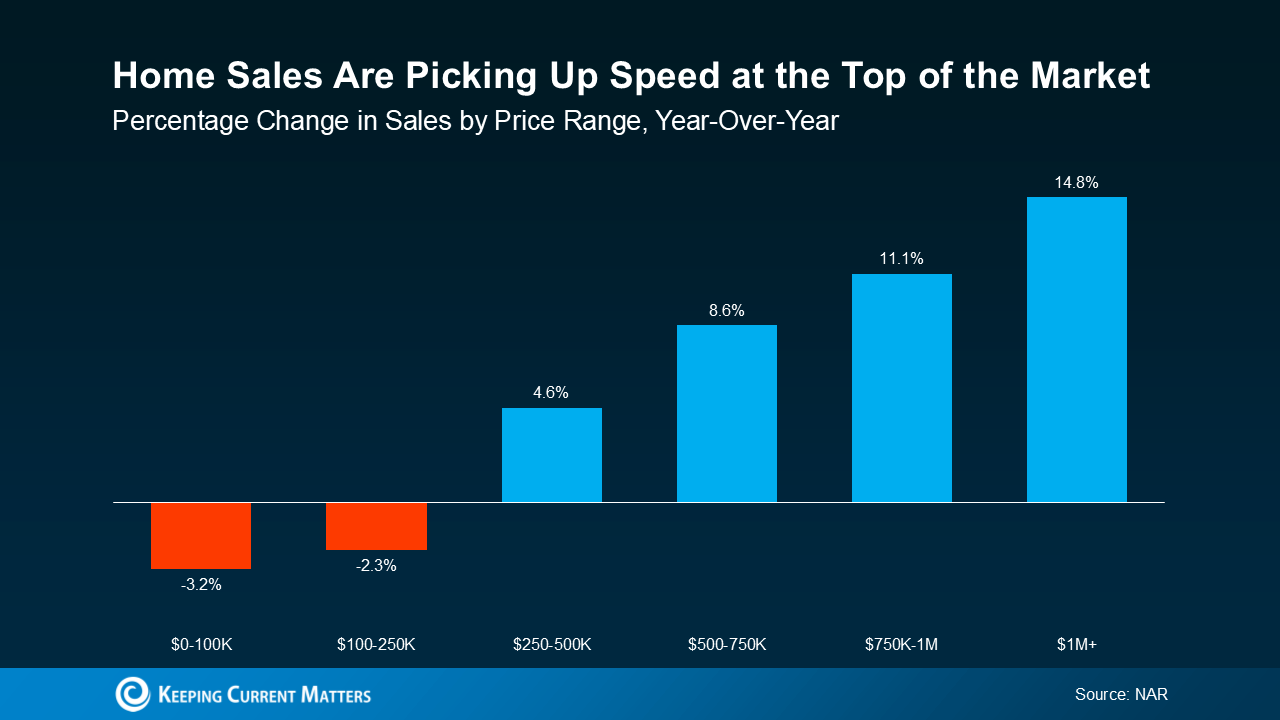
Rates and buyer competition are shaping this market differently depending on price point. Look at recent sales data from the National Association of Realtors (NAR) and the pattern jumps right out.
Homes priced under $250,000 saw sales drop 2-3% compared to last year, while homes priced above $750,000 saw sales climb by double digits (see graph below):
What’s behind the divide? Due to higher rates and the last few years of home price appreciation, fewer buyers can comfortably afford homes at the entry-level price point right now – especially first-time buyers. So, demand in that segment has slowed down.
On the flip side, buyers looking for higher-priced homes have less sensitivity to high-rate environments and more room in their budgets, thanks in part to a strong stock market and their equity in their current home.
That’s the real differentiator. Lower-priced homes are still selling, just not as quickly since today’s rates have shrunk the pool of buyers who can afford to buy their first place right now.
This is exactly why pricing strategy and presentation carry more weight than they used to, especially if you’re selling in that range. Price it right from the start instead of testing a high number, make sure it shows well online and in person, and lean on an agent who can get your listing in front of every buyer shopping in your range. That’s the best way to make sure you catch the attention of one of the buyers who are still looking – and it’s how you prove your home is worth it’s price.
Why Some Homes Sit While Others Get Snapped Up
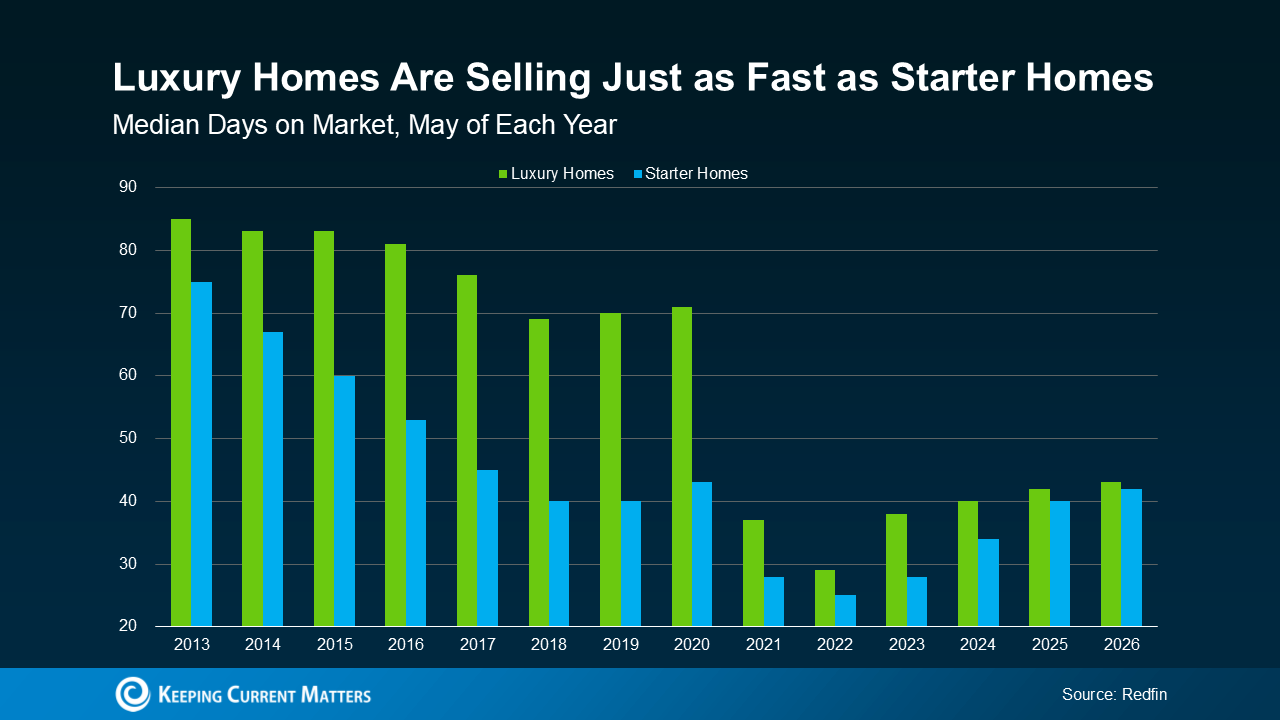
How fast a home sells is shifting by price point too, and the split is just as sharp. For years, luxury homes sat on the market a lot longer than starter homes. That gap has nearly closed, according to Redfin (see chart below):
Buyers with deep pockets are moving fast when a well-priced home in their range comes up. As Zillow puts it:
“The U.S. housing market is splitting in two. Luxury homes are selling at a faster pace than a year ago, with shrinking supply and growing bidding wars.”
If you’re in that range, your house may sell faster than you’d expect. You may even get multiple offers. That kind of competition changes how a listing should be marketed and priced from day 1.
And no matter which side you’re on, that’s information you’re going to want up front if you want to have the smoothest sale possible.
What This Means for Your Sale
If you’re thinking about selling an entry-level home, don’t panic. Homes at your price point are still selling, just at a slower pace than last year. That slower pace means pricing and presentation matter even more right now.
If you’re selling a move-up or luxury house, you’re in a good spot right now. Buyers looking in your price point usually aren’t as affected by today’s rates, so they’re more active, and good listings are drawing real competition.
Either way, your price point is the biggest factor in how fast your house sells and what it sells for.
Bottom Line
Your home’s price point is the real story right now, more than anything you’re hearing in national headlines. Connect with a local real estate agent to map out exactly where your house fits in this split market and build a pricing strategy that gets you the speed and price you’re after.






 What’s behind the divide? Due to higher rates and the last few years of home price appreciation, fewer buyers can comfortably afford homes at the entry-level price point right now – especially first-time buyers. So, demand in that segment has slowed down.
  Buyers with deep pockets are moving fast when a well-priced home in their range comes up. As Zillow puts it: