Nvidia and MediaTek this week announced a major expansion of their partnership under which Nvidia is investing $3.5 billion in convertible bonds issued by MediaTek, while the latter adopts NVLink Fusion platform for its custom AI accelerators, local AI systems, and automotive platforms. On the one hand, MediaTek’s adoption of NVLink Fusion enables it to design accelerators for Nvidia’s fully developed rack-scale platforms. On the other hand, Nvidia gets a slice of the growing market of custom AI accelerators.
Tom’s Hardware Premium Roadmaps
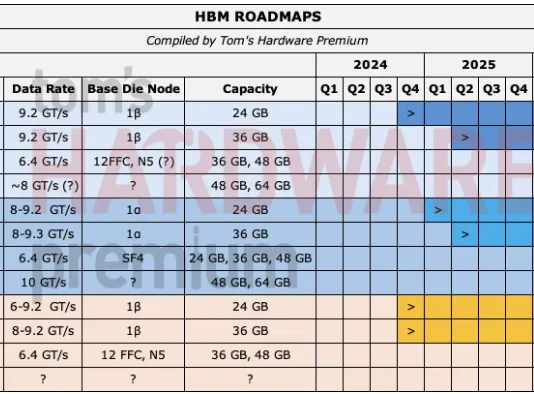
Having become the world’s largest supplier of AI accelerators, Nvidia does not have direct rivals of comparable size. However, in a world where custom AI accelerators are becoming more widespread as more companies see benefits in bespoke solutions, Nvidia must hedge against their rise and ensure that its addressable market expands even if it does not win every accelerator design. One of the ways to achieve this is to spread its NVLink Fusion platform beyond its own products and to popularize it among users of custom hardware. The deal with MediaTek is aimed at exactly that.
AWS, Google, Meta, Microsoft, and now OpenAI are developing their own AI accelerators partly to reduce dependence on expensive merchant GPUs. Nvidia cannot necessarily prevent this trend, so NVLink Fusion gives it another strategy: if customers replace some Nvidia GPUs with their own XPUs, Nvidia wants those XPUs connected using NVLink, paired with Nvidia CPUs where appropriate, and deployed within Nvidia networking and rack architectures. Under the new arrangement, customers can bring an XPU architecture to MediaTek, then MediaTek and Nvidia will supply much of the technology surrounding the actual compute engine.
Latest Videos FromTom’s Hardware
MediaTek will use NVLink Fusion as the foundation for custom accelerators that can evolve alongside future Nvidia architectures. The platform includes the NVLink Fusion chiplet, which connects custom XPUs to Nvidia’s NVLink scale-up fabric using electrical or photonic interconnects; NVLink-C2C, which provides high-bandwidth, energy-efficient links between XPUs, Nvidia Rosa CPUs, and other compatible processors; and Nvidia NVHBM, which enables customized memory configurations and reserves more silicon area for compute.
Using Nvidia’s NVLink Fusion platform for custom AI accelerators enables potential MediaTek customers to concentrate on their differentiated compute architecture while Nvidia and MediaTek provide connectivity, memory architecture, packaging, manufacturing, and rack-level technologies. Essentially, MediaTek’s customers will get a pre-developed rack-scale platform for their custom AI accelerators, something they cannot get elsewhere. Since Nvidia tends to supply AI infrastructure platforms, not just AI accelerators, the deal with MediaTek fits perfectly into its strategy.
It should be noted that while hyperscalers like AWS, Google, or Microsoft can develop their own rack-scale solutions for AI and other workloads, smaller companies barely have enough resources to develop the whole rack-scale machine using off-the-shelf components.
“MediaTek is one of the world’s great semiconductor companies, with exceptional expertise in system-on-chip design, connectivity, leading performance and power efficiency,” said Jensen Huang, founder and CEO of Nvidia. “Together, we are building platforms that bring Nvidia accelerated computing to new markets and give customers the freedom to create differentiated AI systems at enormous scale.”
The companies are also expanding their work on local AI computing. MediaTek previously collaborated with Nvidia on the GB10 Grace Blackwell Superchip powering DGX Spark. The collaboration was considered positive, so Nvidia and MediaTek now plan to cooperate on multiple generations of RTX Spark and DGX Spark processors for client systems, AI developer supercomputers, and enterprise workstations.
Finally, Nvidia and MediaTek will continue their multi-generation automotive collaboration. MediaTek’s Dimensity Auto platforms integrate Nvidia AI technologies and RTX graphics for intelligent vehicle cockpits and can operate alongside Nvidia Drive AGX. Future generations will continue to wed MediaTek’s automotive SoC expertise with Nvidia’s accelerated computing, AI, graphics, and software technologies to build more advanced software-defined and AI-powered vehicles.

Follow Tom’s Hardware on Google News, or add us as a preferred source, to get our latest news, analysis, & reviews in your feeds.
Have you ever passed by an interesting residential building in New York City and wanted to know more about its history? In this series, Brick Underground teams up with Tom Miller, creator of Daytonian in Manhattan, a blog about Manhattan buildings and other historic architecture. Each week, we run an excerpt from the Daytonian’s archives with a link to the full article.
Developer Cornelius W. Luyster broke ground for five high-end townhouses on West 76th Street just west of Central Park West in 1892. Completed the following year and designed by John H. Duncan in the Renaissance Revival style, they were four-stories tall above English basements.
The basement and parlor levels of the westernmost house, 19 West 76th St., were faced in planar brownstone. A decorated dog-legged stoop rose to the double-doored entrance. The second floor was dominated by a three-sided oriel that provided a balcony to the third. Above a terra cotta frieze, the cornice was supported by foliate brackets of the same material.
John H. Uhlman was the original owner of the 25-foot-wide residence. He sold it to Henry A. Caesar and his wife, the former Laura F. Unger, in March 1902.
Born in Brooklyn on May 15th, 1856, Caesar was educated abroad and founded H. A. Caesar & Company, factors and commercial bankers, in 1886. He was also a director of the Germania Life Insurance Company and the Chemical Bank and Trust Company. He and Laura had three sons, Paul N., born in 1889; Harry I., born in 1891; and Charles U., who arrived in 1897.
The family remained at 19 West 76th St. until April 1917 when they sold the house to Solomon Marcuse Stroock and his wife, Hilda Weil. The couple were married in 1904 and had three children.
Stroock was born on September 22, 1873 of German immigrants. He graduated from the College of the City of New York in 1891, received his Masters degree from Columbia University in 1892, and his law degree from Columbia Law School in 1894. After being in partnership with attorney M. Warley Platzek since 1896, in 1907 Stroock established a law office, Stroock & Stroock, with his brother, Moses. (The firm, which later became Stroock & Stroock & Lavan, closed in 2025 after operating for 150 years.)
Stroock was highly involved in Jewish affairs. He was chairman of the board of the Jewish Theological Seminary of America and a member of the American Jewish Historical Society
Solomon Marcuse Stroock suffered a fatal heart attack while he and Hilda were at the Greenbrier Hotel in White Sulphur Springs, West Virginia on September 11th, 1941. The West 76th St. house was sold to James H. Cruikshank, who resold it in November 1942 to George Lawall. In reporting on the latest sale, The New York Times mentioned, “The building contains nineteen rooms and eight baths.”
A renovation completed in 1974 resulted in 14 apartments. None of the alterations, happily, affected the exterior.
For more on the property and the interesting people that lived here, check out the full article.
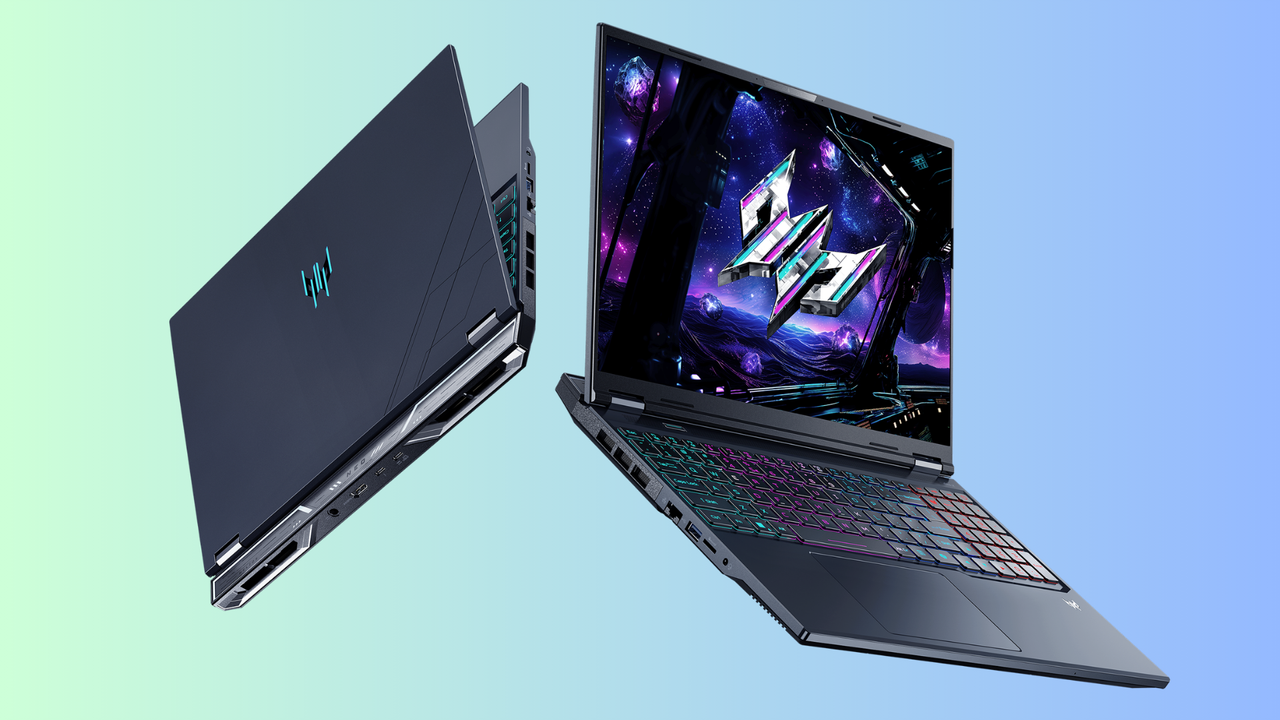
A great deal on an OLED gaming laptop could be yours, if you’re quick. This Acer Predator Helios Neo 16S AI machine has dropped to just $1,899.99 right now, giving you a machine capable of X, thanks to the Nvidia GeForce RTX 5070 Ti included within. Powerful GPU aside, this 16-inch laptop also ships with 32GB of DDR5 RAM and a 1TB SSD, with this deal saving you $300 on its usual price thanks to Best Buy’s Labor Day sale.
● Check out this deal at Best Buy
The Acer Predator Helios Neo 16S AI features an Intel Core Ultra 9 275HX processor, an Nvidia GeForce RTX 5070 Ti laptop GPU with 12GB of fast GDDR7 VRAM, 32GB of RAM, and a 1TB PCIe Gen 4 SSD. This is a high-end spec sheet built with gaming in mind. The 16-inch display is one of the big MVP’s here, though, with an insanely fast 240Hz refresh rate on a gorgeous-looking OLED panel that’ll make games look stunningly vibrant.
You simply won’t find a better alternative for gaming on a laptop than an OLED panel like this one, either. OLED’s are fast, with near-instantaneous response times and infinite contrast ratios that give a depth and clarity to the colors on your screen that a traditional LCD can’t really match.
For gaming, the mobile version of the Nvidia GeForce RTX 5070 Ti is still powerful, even if it doesn’t quite match the desktop version. It still has 12GB of VRAM, however, which will mean you can easily hit high frame rates at the OLED display’s native 2,560 x 1,600 resolution, along with a pared-down count of 5,888 CUDA cores. You’ll be able to manage high and ultra graphics presets in the most intensive games, with Nvidia DLSS support helping in a crunch, thanks to multi-frame generation.
32GB of DDR5 RAM and a 1TB SSD means you’re not compromising on storage or memory with this Acer gaming laptop, despite the AI price boom affecting the entire market this year. Both are more than enough to handle the demands of modern gaming, along with any productivity work you might need to complete. You’re also getting the Intel Core Ultra 9 275HX CPU, which has 24 cores, eight of which are the best-for-gaming performance cores.
You’re getting a mix of plastic and metal with this laptop’s chassis, all-black with RGB lighting, with customizable zones all over. You’ve got longevity with this build, too, with two DDR5 RAM slots that support up to 64GB, along with two M.2 slots. It’s thin and lightweight, weighing just 5lbs with a thickness of just 19mm. You get a good amount of ports, too, including USB-C, and USB-A, along with Ethernet and HDMI. Wireless connectivity is included with Wi-Fi 6E and Bluetooth 5.4, with a 76Wh battery that Acer claims will last almost all day long.
The $1,899.99 sale price for this 16-inch Acer Predator Helios Neo 16S AI gaming laptop is a seriously good one in the current market. Less than $2,000 for an OLED gaming laptop, especially with these specs, is a deal that you’ll struggle to match elsewhere. This Best Buy Labor Day sale discount is set to run out by September 7, but with a deal this good, expect it to sell out before then.
Lately, headlines have floated an eye-catching idea about tapping into your 401(k) to cover a down payment on a home. Maybe you’ve caught the buzz and wondered whether that money could get you into a home faster, especially with affordability as tough as it is.
Here’s what you need to remember. Pulling from your retirement savings is a big decision, so take time to weigh all your options first and be sure to talk with a financial expert before you do anything.
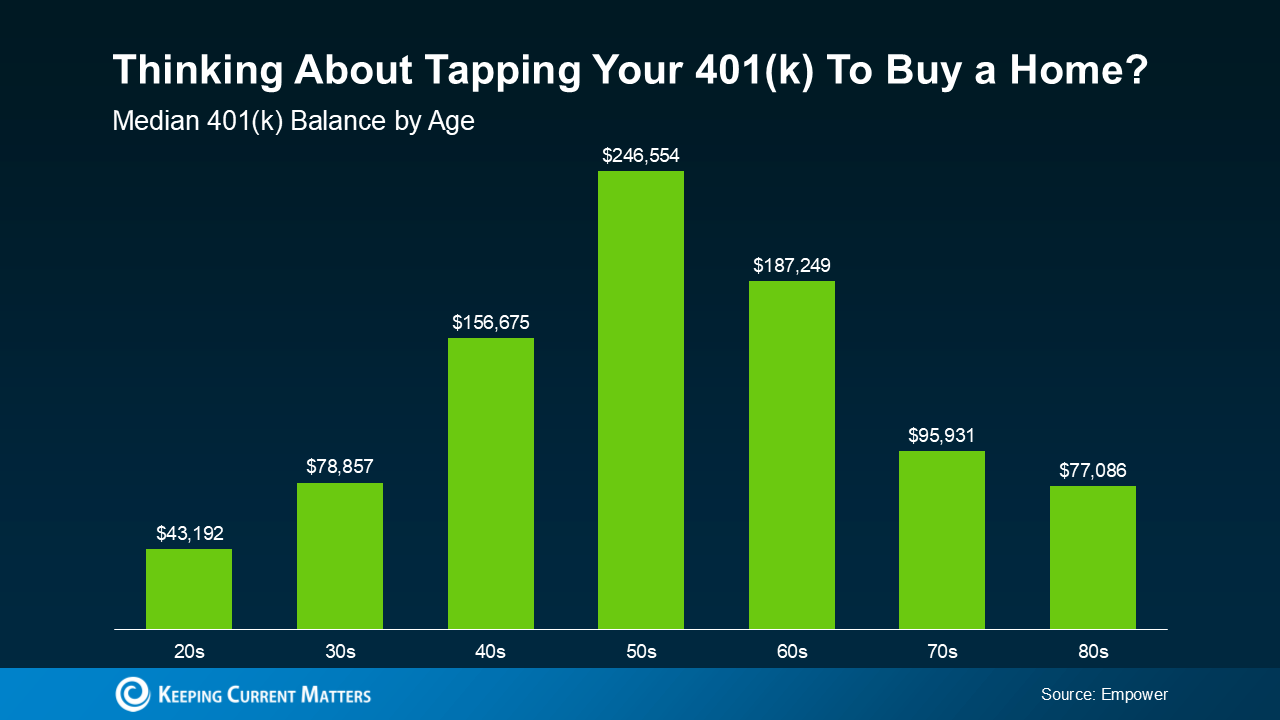
Data from Empower shows many Americans have built up considerable retirement savings. The median 401(k) amount for anyone in their 40s-60s is six figures (see graph below):
 And when you’ve got a good chunk saved and your dream home is right there, reaching for it can feel like an easy call.
But dipping into your retirement savings to buy a home could cost you a penalty and set back your finances later on. That’s why it’s a good idea to explore other options for your down payment first. As Redfin says:
“If you’re struggling to save enough for a down payment, you may be wondering if tapping into your 401(k) is the right option. While it’s possible, doing so comes with significant risks, like early withdrawal penalties and lost investment growth.“
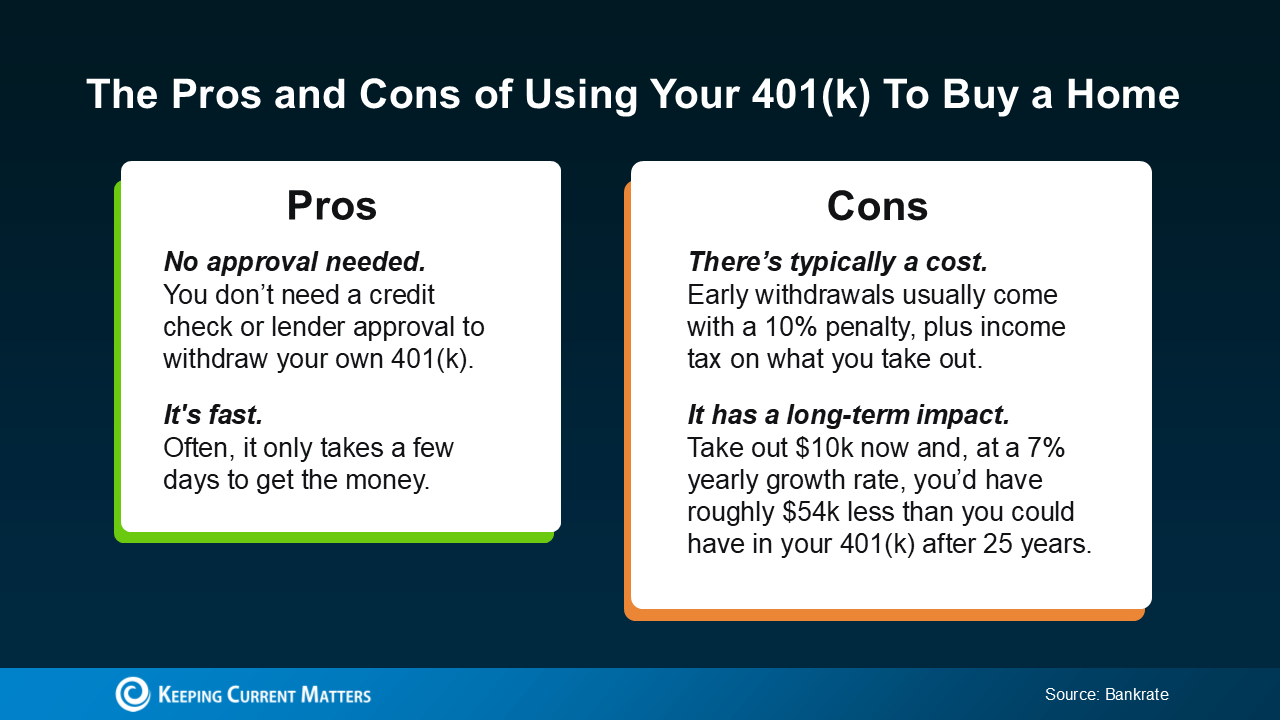
Before you decide, have a financial advisor help you compare the upsides to the risks. Bankrate points to a few of each (see visual):
Your 401(k) isn’t the only way to finance a home purchase. Redfin outlines a few other options to look into before you decide what to do:
Low and No-Down Payment Loans: FHA loans, for example, allow qualified buyers to put down as little as 3.5% of the home’s price, depending on their credit scores.
Down Payment Assistance Programs: Many national and local programs can help reduce what you pay toward your down payment or closing costs.
No matter which route you take, talk with a financial expert first. The buyers who come out ahead build a solid plan with the right professionals before starting their journey to homeownership. As NerdWallet puts it:
“Even if you’re convinced a 401(k) loan is the way to go, it’s important to understand the risks at the outset.“
Affordability is definitely a challenge, but that doesn’t mean tapping your 401(k) is your only way in if you want to buy.
If you’re considering using your 401(k) savings for a down payment, weigh all your options and talk with a trusted financial advisor before you make any decisions. They’ll help you make a plan to fit your goals and your budget.

A recent survey from Talker Research asked Americans to pick one word to describe how 2026 has felt so far. The winner? Stressful. And honestly, there’s been a lot going on.
So, it’s understandable if you’ve been putting off buying or selling a home until things settle down. But you may be waiting on something that’s already happened. While everything else has felt shaky, the housing market has become one of the steadiest things out there. Look at the data.
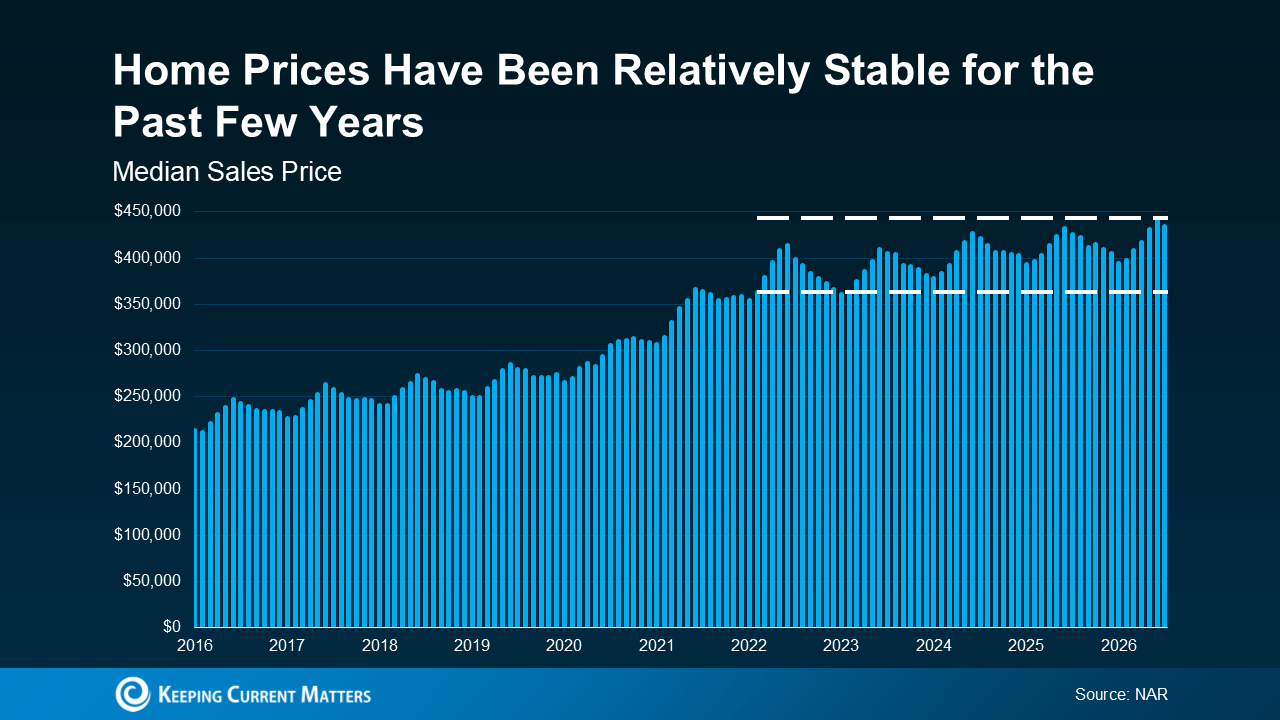
After years of fast increases, data from the National Association of Realtors (NAR) shows home prices have been remarkably steady for the past 4 years (see graph below):
 And experts say that’s what to expect going forward, too. As Selma Hepp, Chief Economist at Cotality, explains:
“In 2026, we expect home prices to remain broadly stable, with modest appreciation at a national level.”
No wild swings. Just slow, steady growth. That’s a healthy market. Of course, that pace can vary a bit depending on where you live. But nationally, steady growth like this makes it easier to plan your budget, whether you’re buying or selling.
For years, the supply of homes for sale was a moving target. It dropped fast during the pandemic and has been climbing pretty reliably ever since. Now, that pace of growth has slowed down. According to Realtor.com, inventory today is very close to where it was this time last year (see graph below):
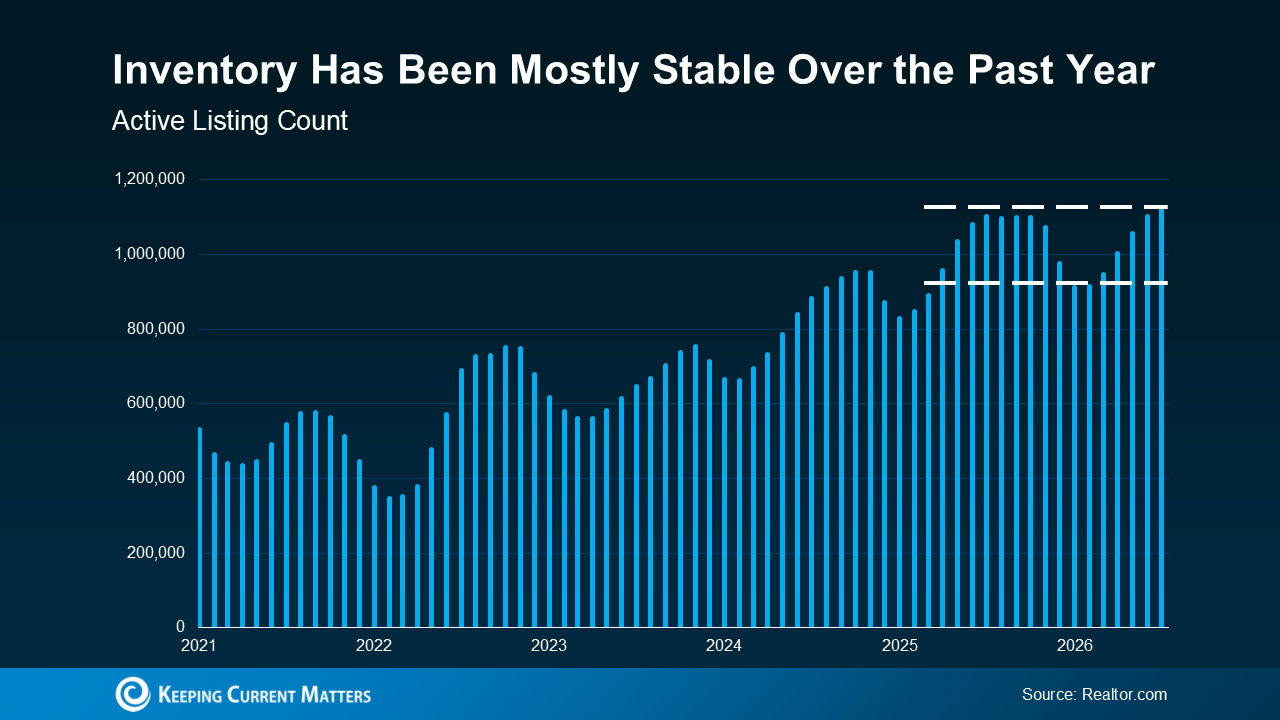 That’s helpful no matter which side you’re on. When the number of homes for sale isn’t changing much, you know what you’re walking into – how many options you’ll have as a buyer, and how much competition you’ll face as a seller.
Yes, rates jumped dramatically back in 2022. But since then, Freddie Mac data shows they’ve stayed between 6% and 7% for the better part of the last 3 or so years (see graph below):
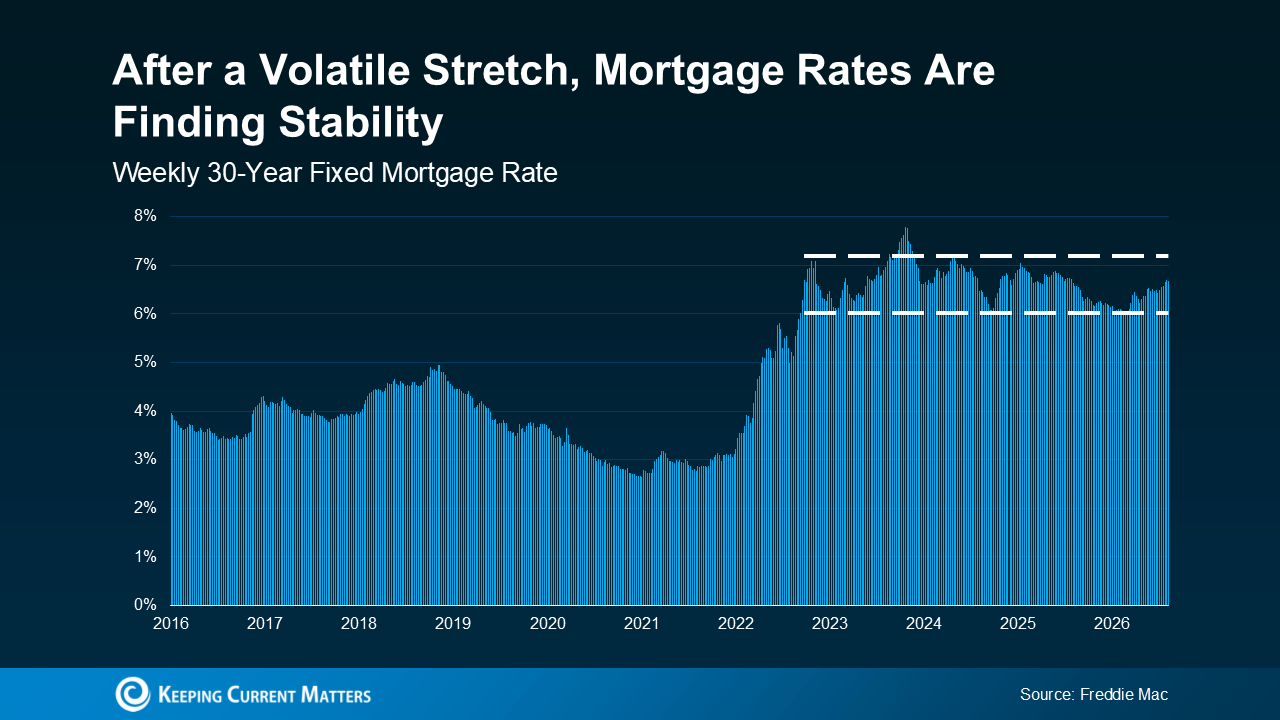 Yes, there was one brief spike above that threshold, but overall, rates have stayed in that range for a while now. That predictability helps when you’re planning a move.
And now that this seems to be a longer-term trend, people have accepted it as the new normal. Buyers have gotten comfortable purchasing in that range, and sellers have gotten just as comfortable listing in it.
That comfort’s important because when both sides know what to expect, they keep making moves. In other words, the market isn’t frozen waiting for something to change. It’s moving calmly.
The rest of the world may feel unpredictable right now, but the housing market doesn’t have to. Prices, inventory, and rates have all found solid ground.
If stability is what you’ve been waiting for, it’s already here. Connect with a local real estate agent if you want to talk through what that means for your move.