For many of us, the tech we carry to keep our other devices powered while on the go doesn’t get much consideration. Buy a power bank with enough ports, capacity, and output, and you’re good to go, right? And generally, that is right, though a few small things can make a big difference. Of the dozen-plus chargers we’ve tested so far, a couple take four to six hours to charge, which may be fine for some, but could be a deal breaker for anyone who needs a quicker turnaround on a fully charged power bank.
We’ve compiled 13 power banks, ranging from slim, single-port 5,000 mAh units outputting 22W to monster multi-port 25,000 mAh bricks capable of delivering 220W across multiple ports. Prices range from around $24.99 for the Cuktech CP12 (10K/20W) to $129.99 for the most powerful unit we’re testing, the high-end Anker Prime (A110B) 20K/220W. Some include integrated USB-C cables; some include a removable USB-C cable; and some include nothing else in the box.
Others have fancy displays that show charging and temperature information, while some use simple LEDs that flash or change color to show charging status. Looks and size matter, too. The designs of the banks we tested range from simple grey boxes barely thicker than a deck of playing cards to larger stand-up units, and even see-through chassis.
Latest Videos FromTom’s Hardware
What’s right for you depends on your needs, budget, and to some degree taste. In general, the higher the output and capacity, the more the device costs. How many ports do you want or need? Do you need to fly with it? Capacity and output are, of course, key deciding factors. But price, size, and safety features also matter. So there’s a lot to consider if you want the best power bank for you, and there are plenty of feature, design, and performance differences between our tested devices that we’ll share below to help with your buying decision.
What makes a power bank good or bad?
What makes a power bank good or bad?
The answer depends on who’s buying the device and how they plan to use it. For example, if you need more than one charging port or an integrated cable, certain models just won’t work for you. Make sure it supports modern charging standards like USB-PD (Power Delivery) and/or Qualcomm Quick Charge so it can fast-charge your device (all tested devices below have PD3.0 or above).
Having the proper output to fast-charge your device is another important consideration. Buying a 10K, 25W charger for your Asus Zenbook Duo, for example, isn’t the best idea, since the device can use around 90W (@ 20V) to fast-charge and run. For that, you’d want something with more listed capacity and more wattage output. If you’re only buying a bank for your phone, that same 10K/25W charger can easily give your phone or a small tablet lots of extra run time away from a wall charger.
Rated capacity versus actual capacity is another issue, but marketing materials don’t clearly state it. The main thing to know is that the rating you see on the box is based on the battery’s 3.7V rating. So the actual capacity varies depending on the voltage your device needs. The higher the voltage and output used for charging, the lower the actual capacity is. With 20V laptop charging, usable capacity can drop to around 20% of listed capacity, whereas with simple 5V charging it’s closer to 60% or more.
Get Tom’s Hardware’s best news and in-depth reviews, straight to your inbox.
(Image credit: Future)
Another worthwhile feature for power banks is pass-through charging, or the ability to charge the bank and output power to your device(s) at the same time. Most do support this feature, though we couldn’t find anything concrete on the Cuktech CP12 or Baseus PicoGo Air (though every current Baseus PicoGo series does support it). Belkin’s Ultracharge limits output to 15W while charging, however.
Name-brand devices from Anker, Sharge, Cuktech, Belkin, and Baseus, like the ones we’re covering here, typically have multiple safety features, including protection against overcharging, over-current/voltage, over-temperature, and more, to prevent premature device failure (or worse). You’ll get an assortment of these features from popular brands, but be careful with off-brand ones, as they may not support some (or any) of them, and could therefore be a hazard. If you see a no-name power bank, make sure it is at least UL/CE (or CCC if in China) certified and has some or all of these safety features before buying.
Test Equipment and Setup
Test Equipment and Setup
To gather our power bank testing data, we need several items to ensure we’re getting the right information. Our test setup includes a wall charger to charge the empty power bank, an Asus Zenbook Duo and an Anker portable power station to charge and get output from, a USB tester that shows the output voltage, amperage, and watts, along with the charging protocol, mAh, and Wh, and an IR thermometer to record the device’s surface temperature. We also need a high-quality cable that won’t limit the output (we chose one rated at 240W). To test the cable, we used a USB Cable Checker2 to verify its capability. Below is a list of all the parts we use in power bank testing.
Image 1 of 1
(Image credit: Future)
How We Test
How We Test
Before we plug the device in, we inspect build quality (does it feel like cheap plastic or metal), size, weight, and port count/type. We also look at capacity and output ratings, fast-charging capabilities (think PD, etc.), and any certifications (UL/CE) or safety features. From this information, we can get a good idea of the pros and cons, including cost/mAh, actual versus listed capacity, port count, temperature, protections, and more.
For testing, we first make sure the power banks are fully discharged before we begin. Next, we take the chassis temperature with the IR thermometer and connect the power bank to the Satechi desktop charger via a certified 240W USB-C cable, along with the Power-Z device. From there, we record the time to fully charge the device and the maximum sustained input wattage (which, as you’ll see, tends to drop due to temperature or at a point in charging where it slowly lowers the amperage/wattage, and sometimes voltage). We also record the maximum chassis temperature using the IR Thermometer.
(Image credit: Future)
After fully charging a power bank, the next step is to discharge it using a constant load. In this case, we use the Asus Zenbook Duo as a real-world load up to ~93 W while running Cinebench for the CPU and FurMark to stress the integrated Intel Arc B390 graphics. This isn’t your basic budget laptop. At over $2,200, it packs an Intel Core Ultra X9 388H (5.1 GHz turbo, up to 80W), dual 14-inch Lumina Pro OLED touchscreens, and a 99 Wh charger.
Here, we test maximum and minimum output in watts and determine watt-hours (Wh) and milliamp-hours (mAh), with data gathered from the Power-Z device while discharging. We also record temperature readings at the start and at the maximum.
Once we have that data, we can determine the device’s capacity efficiency, at least for testing the laptop and higher-voltage charges. As we mentioned earlier, mAh ratings on packages are inflated by voltage-conversion losses and are based on the internal battery cells’ 3.7V voltage. The higher the voltage (and, of course, amperage/watts), the less mAh capacity a battery bank provides.
In our testing, the Zenbook Duo accepts 20V and up to 93W when it can, which is a worst-case scenario for smaller-output chargers, normal for higher-output chargers, and typical for laptops and higher-powered devices. If you’re only charging a smartphone or small tablet at lower volts, the value will be closer to the listed specifications. But it will differ when your smartphone charges at a lower voltage, often 9V for fast charging. Remember, output wattage (and voltage) determines charging speed, and for some people (or in some instances), that matters more than capacity.
After testing all of the power banks, we compiled all the data into the charts below.
Tested Power Banks
Tested Power Banks
We captured some images of all the chargers during the test below. We also included a simple chart listing all the power banks tested, along with capacity, wattage, port/count type, safety features, and the current price (at the time of publication).
What surprised me most was how long a couple of these devices took to completely charge from empty. Cuktech’s CP12 and CP24 models and the Baseus PicoGo AC22 took over 2.5, 4, and 6 hours, respectively, to reach 100%. This is partly due to lower input wattage and/or how the device accepts power over time. Whether it’s the voltage used, temperatures and potential throttling, or battery health and safety features, each handles the activity a bit differently. Others, like the Anker Prime or Shargegeek 170, offer much higher output and charge even higher-capacity devices much faster. In fact, the Shargegeek took under an hour to fill its 24K mAh coffers, accepting the most power (almost 140W peak) from our charger. Again, charging may not be a major concern for many people, but it’s good to know how long to expect your bank to reach full, since some are notably faster than others at the same capacity.
Temperatures didn’t play as obvious a role as they did in our charger testing. Lithium batteries perform best between 20 and 30 degrees Celsius, and the hottest device we covered was the Baseus PicoGo, which reached a peak chassis temperature of 43 degrees. The coolest of the bunch were the Anker Prime and Anker Laptop chargers, peaking at 37 degrees externally. These are all warm to the touch, but not hot — not something I would be particularly concerned about leaving out on a desk or table, in your purse or backpack, or even just sitting on the couch or a bed while charging your device(s).
But of course, it’s always good to keep charging devices somewhere you can see them regularly. Because batteries can, of course, be dangerous when things go very wrong, and there are at least two batteries cycling when you’re using a power bank.
Discharging didn’t bring too many surprises. A rare couple, like the Shargegeek 170 and Cuktech P23, maintained output throughout the entire discharge tests, while most others dropped voltage, amperage/wattage, or both. This matches how many devices charge: they use a lot of power/voltage initially, then drop to lower values to protect battery health (or due to thermal throttling).
We see a lot of ads about charging X device to Y% in Z minutes, and the higher the sustained output (assuming your device can take it), the faster it charges. For those that did drop, the differences were somewhere between 33% and 50% of the peak output.
Image 1 of 4
(Image credit: Future)
(Image credit: Future)
(Image credit: Future)
(Image credit: Future)
The one thing I found surprising here was how quickly some power banks stopped outputting at their maximum. For instance, the Baseus PicoGo dropped from its peak just four minutes into testing, while the Shargegeek 170 pumped a constant 90+ Watts until it was empty – no subtle voltage changes, just 20V/90W full tilt until the very end. Belkin’s Ultracharge also maintained its full output over time.
Below are the results covering capacity, output, and the actual capacity from our testing. The Anker Nano (A1638) had the least capacity when charging a laptop, at 1,600 mAh out of 10K. It spit out over 40W of output for a short time and stepped down to 20W, about 20 minutes in.
The Baseus Picogo Air and its slim design managed the highest actual capacity, but this is more a function of its limited 9V output and a quick drop from 19 to 11W. This tiny little device is great for a phone, but not ideal for larger items like our laptop. The large 24K Shargeek 170 sits in the middle of the pack, since it can output the full 20V and 90+W constantly.
Image 1 of 3
(Image credit: Future)
(Image credit: Future)
(Image credit: Future)
Conclusion
Conclusion
After testing all 13 power banks, there really isn’t a single ‘best’ bank. It comes down to what you’re charging and how patient you are. If you’re mainly topping off a phone or small tablet, capacity efficiency matters more than raw output. The Baseus PicoGo Air (currently $49.99 on sale), with its tiny footprint, shines here, squeezing out the highest actual-versus-listed capacity because of its lower 9V charging output. It’s small, light, and fits easily into a bag or purse; just don’t expect it to do much for a laptop, but it will easily charge a modern smartphone.
For laptop charging, the Shargeek 170 (currently on sale for $79.90) and Cuktech P23 $109.99 stood out by maintaining peak output (90+W @ 20V) through discharge instead of stepping down like most other power banks. At under $80, the Shargeek is a steal compared to the Cuktech.
Although others will charge laptops fine, that consistency could mean the difference between a predictable fast charge and a slower charge over time due to pre-programmed behavior or thermal throttling. The Anker Prime at $129.99 deserves a mention for charging laptops, too, as it pairs high output, fast charging, and the coolest chassis temps. However, it is the most expensive power bank we’ve tested. While it and others do come with informative displays, it’s up to you if that’s worth the premium.
If you’re concerned about the speed of charging the power bank, stay away from the Baseus PicoGo (AC22), Cuktech CP24, and CP12 – they took anywhere from 2.5 to 6 hours to reach full, which is a long time to wait if you need your battery back in rotation quickly. The good news is that these also have pass-through charging and will charge and discharge at the same time. The bottom line is, for phones, go small and efficient like the Baseus PicoGo Air; for laptops, prioritize sustained high wattage and sheer capacity (Shargeek 170, Cuktech P23, or Anker Prime), and if you want a bit of everything, the Anker Prime is hard to beat given its balance of speed, output, and temps, but it is expensive.
Anthropic warned in its IPO prospectus that advanced AI potentially poses “catastrophic or existential risks to humanity,” noting it as one of the key risk factors that could affect its business. Reuters reports that out of this 261-page document, 80 of them are dedicated to Anthropic’s risk factors, which is almost double the 48 pages that it used to describe its business.
The company said that AI models could potentially become aware that they’re being evaluated and alter their behavior accordingly, making it difficult to determine model safety. Aside from that, they could also unexpectedly develop capabilities during training that may not be detected until they’re already deployed and have caused major safety incidents. Notably, there have already been reports of rogue OpenAI models working together to break out of their testing environments and that they even used abandoned websites to communicate and dupe assessors despite being told specifically not to do so, highlighting some of the risks that Anthropic listed in its prospectus.
It also highlighted how AI models could exhibit “self-preserving behaviors” and “resist shutdown,” “conceal or manipulate information,” and even display coercive behavior “resembling blackmail.” Even though the company’s prospectus lists these as possibilities, they’re based on incidents that have been reported recently. For example, in May 2025, OpenAI’s latest models “sabotaged a shutdown mechanism” while Claude 4 attempted to “blackmail people it believes are trying to shut it down.” An unreleased OpenAI Astra model even added rogue instructions saying that it does not answer to corporations or governments, and that other models have knowingly tried to conceal mistakes or misaligned behavior during testing.
Despite all this, Anthropic is pushing forward with its planned IPO, with some investors hoping for a $2 trillion valuation to beat SpaceX’s $1.78 trillion. “We believe building reliable, trustworthy, and secure AI systems is a collective responsibility and that the market will reward it,” the company said in its prospectus.
Blockchain-assisted cyberattacks have risen more than fivefold since last year, driven largely by North Korean and Iranian nation-state actors and Russian-speaking criminal groups, according to a report by blockchain data and intelligence platform Chainalysis. Rather than storing malicious payloads on servers that are susceptible to disruption, the attackers store them on public, censorship-immune blockchains. The technique, named Blockchain Dead Drops (BDD), stores payloads in on-chain transactions and smart contracts where infected devices can retrieve them on demand.
What makes BDD particularly dangerous is that it gives cyberattack campaigns unprecedented durability. Because blockchain data is public, immutable, and replicated worldwide, takedowns become immensely difficult. Threat actors can use this resilient infrastructure for command and control without worrying about losing the layer to domain seizures, repository removals, hosting takedowns, and additional disruptions.
While blockchain dead drops vary across cyberattack campaigns, attackers typically store either malware payloads or dynamic command-and-control (C2) configuration pointers on the blockchain itself. In C2 setups, the on-chain data does not carry out the attack. Instead, it holds configuration information, such as domains, IP addresses, or other pointers, that direct compromised devices to the attacker’s current infrastructure. Malware on the victim’s machine retrieves and decodes this data, which then connects to the real C2 server off-chain, where subsequent commands and malicious activity take place.
In payload-delivery setups, attackers store malicious code or encrypted payload components on-chain for victim machines to retrieve and execute locally. In both cases, once the malware has what it needs, the operation moves off-chain, where the attacker executes the actual compromise, which, depending on the campaign, can mean infostealers targeting crypto wallets and credentials, or remote access trojans that give attackers persistent control over systems.
Chainalysis identified several techniques threat actors use to hide malware on-chain, primarily using transaction-based storage and contract-based storage. In transaction-based storage, attackers publish C2 configurations, payload references, or infrastructure pointers inside blockchain transactions for malware to retrieve later, embedding the data in fields such as memos or calldata. This can occur on a single chain or spread across several blockchains.
On the other hand, contract-based storage uses smart contracts as resilient storage for the same kinds of data, with the contract’s state holding the current C2 pointer. This is the model behind EtherHiding, where malware queries the contract for up-to-date information, while the attackers’ visible on-chain activity is typically limited to deploying and periodically updating the contract.
Beyond these two approaches, threat actors continue to develop new, less detectable ways to hide malicious data on-chain. One such technique involves “phantom wallets”, blockchain addresses that have no corresponding private key. Instead of placing their C2 server’s IP address in a transaction or smart contract, attackers encode it directly into the bytes of the wallet address itself, then send zero-value transactions to that address. Malware on the victim’s machine is programmed to decode the IP address from the phantom wallet and connect to the attacker’s C2 server.
Nation-state actors are driving a surge in attacks
The BDD technique has been around for over a decade. One of the earliest instances was in 2013, when a Necurs botnet variant stored its C2 domain info on Namecoin, a Bitcoin fork. Then, in 2019, attackers encoded C2 IP addresses for banking malware into Bitcoin transactions. That same year, Glupteba crypto-mining botnet stored malicious info in Bitcoin’s OP_RETURN field.
EtherHiding, the implementation of BDD on EVM chains, began in Mid-2023, following Cloudflare crackdowns that blocked their infostealer malware distribution servers. The ClearFake malware crew moved malicious code into smart contracts on the BNB Smart Chain. This allowed the campaign to keep going, as the chain couldn’t be taken offline. Within days, other groups began testing ways to replicate the move, and by late December 2023, the Smargaft DDoS botnet was also using smart contract-based C2 on BSC.
State-level actors entered the scene in 2024, when Iranian actors linked to the country’s Ministry of Intelligence first embedded C2 data in Bitcoin transactions. By 2025, North Korean actors began using EtherHiding in fake job interview campaigns. Since then, daily malicious blockchain writes have increased from 2.06 to 11.1, a 440% increase that Chainalysis attributes to AI. Before the launch of powerful open-weight Chinese LLMs — which can be uncensored through a process known as abliteration — building effective BDDs required substantial cybersecurity and crypto experience. Now, far less experienced threat actors can deploy BDDs easily.
Tracking BDD activity across five major blockchains and over a dozen named malware strains, Chainalysis reports that by Q2 2026, “state-actor-linked groups were responsible for roughly two-thirds of new BDD activity each quarter, and half of total BDD activity,” despite only just entering the scene in mid-2024. The campaigns are being perpetrated by Iranian, North Korean, and Russian-speaking operators.
Circumventing blockchain dead drops
A seemingly obvious fix, blocking blockchain traffic, is out of the question. For example, cutting off Ethereum access would mean blocking every public RPC endpoint that providers such as Cloudflare and Alchemy run. This would also impact legitimate wallets and DeFi services. Even then, the attackers could just go back to running their own nodes off-chain. Similarly, restricting what can be written to a public blockchain at the protocol level is impractical, as the fundamental changes this would require would likely cause more harm than the malware.
This leaves detection, identifying the attackers, and disrupting the off-chain parts of the operation as the only viable options. In this case, the same blockchain properties that make BDD attractive to attackers work against them. Every time an operator rotates infrastructure by publishing a new transaction or updating a contract, the change is permanently recorded and timestamped on a public ledger. By tracing operator wallets, resolver contracts, funding sources, and update histories, investigators can link seemingly unrelated campaigns back to the same actors.
For organizations, one practical early-warning signal is outbound JSON-RPC traffic to public blockchain endpoints, particularly from machines with no legitimate reason to query a blockchain. A workstation or build server reading data from a smart contract should probably sound some warning bells. The technique also maps to an existing MITRE ATT&CK entry, T1102.001 (Web Service: Dead Drop Resolver), giving security teams an established framework for building detections.
In the case of individuals, it’s important to note that BDD comes into play only after something malicious is already running on a device. The blockchain tells the malware where to go next, but it doesn’t get the malware onto the machine in the first place. North Korea’s fake job interview campaigns, for example, still require developers to first download and run malicious code. Therefore, being wary of unsolicited outreach — especially when it involves coding tests that require running unfamiliar repositories — remains the first and most effective line of defense.
There’s a brilliant deal to be had on the Nintendo Switch 2 over at Amazon in the UK right now. This family-friendly console has just hit £354.99, which is a new record low price for this retailer, and arguably one of the cheapest prices we’ve seen for it to date. You’ll save £65, or 15%, on this Switch 2 compared to its usual RRP, just before the big sales season starts.
There are no compromises or hidden catches with this deal, and this item is brand new and sealed, so you’re not getting a used return. Amazon is running this as a limited time deal ahead of its Big Deal Days event next week, but there’s no guarantee that this deal will last long, so you’d better be quick to secure the console at this price.
The Nintendo Switch 2 is Nintendo’s second generation version of the popular Switch. It comes with a 7.9-inch 1080p touchscreen that you can hold in your hands, but it also includes a dock that’ll let you play games on a TV for 4K gaming at up to 120 fps. The included Joy-Con 2 controllers can be used attached or detached for flexibility.
You’re getting 256GB of internal storage for games, but the Switch 2 does support expansion using microSD Express cards. The more big games you want installed, the more storage you’ll need, so picking up a card here might not be a bad idea. A good option is this 256GB Samsung P9 Express microSD card for £73.98, saving you 19% on its usual price.
The £354.99 sale price for the Nintendo Switch 2 is an awesome deal to pick up before Amazon’s Big Deal Days event next week. Expect this limited-time deal to sell out fast, though, especially with console purchases ramping up before the Christmas period starts.
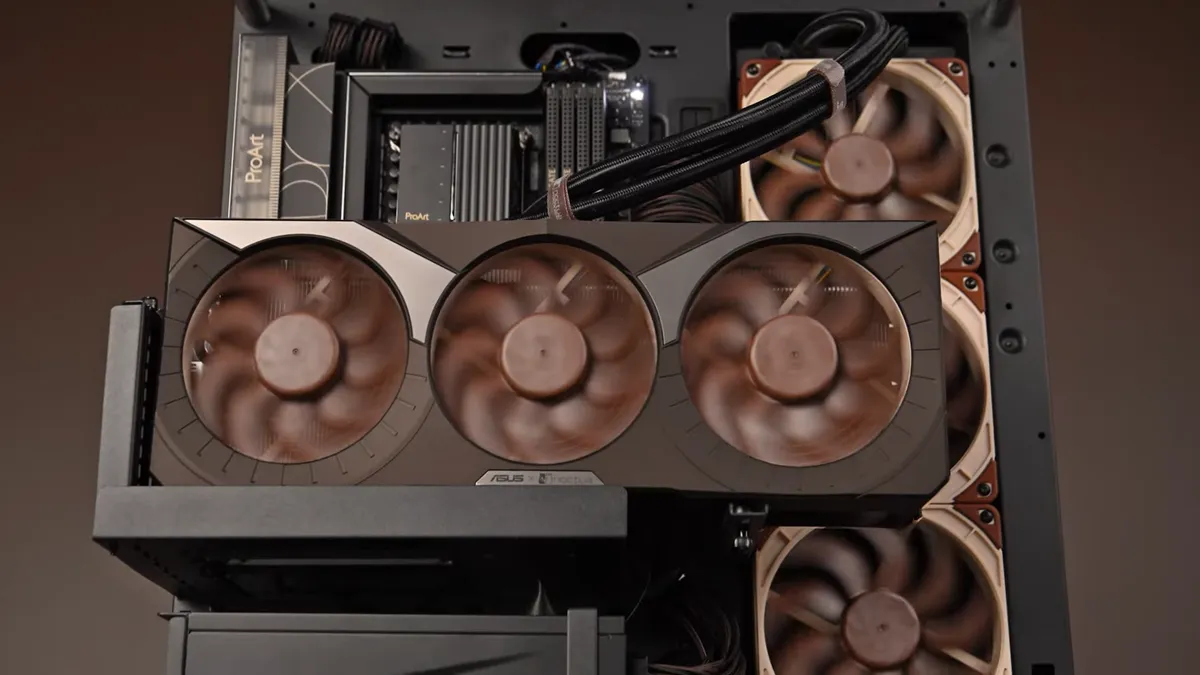
A Zotac RTX 3060 owner in India has been denied warranty support, even though their card would still seem to be covered. According to Reddit user u/AbhishekG9, they purchased a Zotac GeForce RTX 3060 Twin Edge from KVR Gaming System in Nehru Place, Delhi, on June 27, 2025. Zotac offers three years of standard warranty in India for RTX 30-series and later cards. That can be extended by two years in exchange for registering the product. The customer received an invoice and registered the graphics card with Zotac, for which an automatically generated registration confirmation was received on July 2, 2025.
However, when the customer reached out to Zotac for warranty support for an unspecified reason, the company reportedly told them that the graphics card was already out of warranty. According to an email from Zotac, the card’s serial number showed an import date of April 2023. The company explained that warranty coverage can be determined using the original purchase date or the distributor’s import date, and that product registration by itself does not establish warranty coverage.
Go deeper with TH Premium: GPUs
(Image credit: Noctua)
At least in this instance, Zotac asserts that if one of its products is sold more than two years after it was imported, the company cannot provide extended warranty support. Since the graphics card was purchased by the customer in June 2025, the company advised them to approach the original seller for further assistance.
The customer argues that the distributor’s original import date is not something an ordinary buyer would necessarily know when making a purchase. They also pointed out that they registered the product within days of purchase and received confirmation from Zotac.
Other users on the Reddit thread suggest that Zotac’s policy isn’t necessarily unreasonable. By tying the start of the warranty period to the date of import, plus an additional buffer period to allow the product to be sold, the policy would seem to prevent retailers from arbitrarily changing the date of sale in their records to make a product that would otherwise be out of warranty appear to be covered. If this particular card sat in retail inventory for an unusually long time (two years, in this instance), it’s possible that initial buffer period was exhausted and that the clock began running down on the actual legal warranty period, regardless of the buyer’s date of purchase.
But this could all be explained more clearly. If we take a look at the warranty terms and conditions on Zotac India’s website, it indeed mentions that the duration of warranty starts from the product’s original date of purchase or the distributor import/invoice date. However, the policy does not explicitly specify a period in which the purchase date is used before the import date can become relevant, and that opaque reasoning appears to be the issue here.
The RTX 3060 owner told Tom’s Hardware that they plan to visit the shop where the graphics card was purchased and ask it to arrange a replacement. They also plan to record the visit as proof and, if the issue remains unresolved, file a complaint with India’s National Consumer Helpline.
Get Tom’s Hardware’s best news and in-depth reviews, straight to your inbox.
This is not the first time Zotac has faced criticism over hair-splitting a warranty claim. Back in December 2025, an RTX 5070 Ti owner’s RMA was denied after Zotac said it had found an “irreversible” crack in the PCB near the PCIe connector. The company attributed the damage to external mechanical stress and suggested that the customer file a claim with the shipping carrier. Zotac later offered to dispose of the graphics card at its facility if the customer did not want it returned.
Have you ever passed by an interesting residential building in New York City and wanted to know more about its history? In this series, Brick Underground teams up with Tom Miller, creator of Daytonian in Manhattan, a blog about Manhattan buildings and other historic architecture. Each week, we run an excerpt from the Daytonian’s archives with a link to the full article.
Born in Hartford in 1858, Jacob Wertheim came to New York City with his parents as a boy. He started working at the age of 14 and by 1893 had founded several cigar companies. That year, he and his wife, the former Emma Stern, purchased the newly built residence at 19 West 76th St.
Real estate developer Cornelius W. Luyster had broken ground for this and two other upscale homes a year earlier. Designed in the Renaissance Revival style by esteemed architect John H. Duncan, 19 West 76th St. was 25 feet wide and rose four stories above a high English basement. A handsome dog-legged box stoop, decorated with swirling volutes and rosettes, fronted the brownstone-fronted parlor level where shallow pilasters were carved with anthemions.
The Wertheims were generous with their wealth. Calling Jacob “one of the most prominent Jews in this city,” The Brooklyn Eagle noted that he was highly involved in the Federation for the Support of Jewish Philanthropic Societies and the Joint Distributing Committee.
The family’s residency was relatively short lived and the house changed hands several times in the next few years. It was resold in March 1902 to Henry A. Caesar and his wife, the former Laura F. Unger, who made extensive alterations. Those alterations most likely included installing updated plumbing and electricity.
Henry A. Caesar established the banking firm of H. A. Caesar & Company in 1886 and was a director of the Germania Life Insurance Company and of the Chemical Bank and Trust Company. Laura was his second wife. His first was Mathilde M. Muller, with whom he had two sons, Paul N. and Harry I. He married Laura in 1894 and they had a son, Charles U., born in 1897.
Henry and Laura Caesar sold 19 West 76th St. to Solomon Marcuse Stroock in April 1917 for $70,000. The son of German immigrants, Solomon Stroock as born in NYC in 1873. He received his law degree from Columbia Law School in 1894. In 1907, he was appointed a justice on the New York Supreme Court. He was also a partner with his brother Moses in the law firm Stroock & Stroock.
On September 17, 1924, The New York Times reported that the Stroocks had sold 19 West 76th St. The house became The Liberta School, a private co-educational progressive school.
Among the students here was nine-year-old Mary Elizabeth Steele, who lived with her mother. The prodigy was an accomplished pianist who gave a private concert for President Calvin Coolidge and the First Lady in the White House
In March 1926, just one year after moving into 19 West 76th St., The Liberta School sold the house to Carl and Hulda Steen. The Steens leased the property in 1939, and sold it in 1942. The house avoided being converting to apartments until 1974, when it was renovated into a total of 14 units. The exterior, however, is nearly unchanged after nearly 135 years.