Iran’s spiritual leaders tend to call the U.S. the Great Satan to express their spite, but it turns out that its military, surveillance, propaganda, and even allied Houthis are eager to use American-built AI technology to target the U.S. Navy and develop weapons, surveillance, and propaganda, Anthropic’s September 2026 threat report revealed.
Go deeper with TH Premium: GPUs
Arguably, one of Anthropic’s most remarkable findings is that an Iran-linked threat actor used an American AI model, Claude, to support military reconnaissance and develop targeting recommendations against U.S. naval forces in the Middle East. The perpetrator combined publicly available ship and aircraft transponder identifiers with commercial satellite imagery and information on U.S. naval movements, and even extracted the names of U.S. military personnel from captions of publicly available military photographs. It also researched potential vulnerabilities in communications equipment used aboard ships, including known flaws affecting Cobham Sailor VSAT terminals, Cisco communications equipment, and Schneider Electric EcoStruxure systems. Anthropic said it banned the account, introduced additional detection mechanisms, and shared its findings with government authorities.
Another striking case involved a cell in northern Yemen controlled by Houthis (which are in turn controlled by Iran) that used Claude Code to support three weapons programs: a guided rocket that uses a phone-class flight computer that assists terminal guidance, a multistage ballistic missile targeting a range of more than 2,000 km, and an R2000 missile family that included a hypersonic glide vehicle variant. The group used Claude to develop guidance, navigation, and control software; integrate an open-source autopilot with a phone-class flight computer; write control and position-estimation code; tune parameters; build firmware; and even run flight simulations. Essentially, the group used multiple Claude instances instead of a group of software engineers for coding, code review, research, and simulation.
Latest Videos FromTom’s Hardware
While Houthis are technically not Iranians, they can certainly share their research and development results with their allies and potentially use Iran’s industrial capacity to build their weapons.
In addition to building targeting recommendations against American naval forces as well as speeding up the development of weapons, Iran used Claude for surveillance tools.
One Iran security-linked unit used Claude to analyze 155,216 tweets to profile, identify, and surveil 6,388 opposition individuals in a single year. Another group used the model as an engineering pipeline to develop domestic tracking tools, including the production-deployed “al-Najm al-thāqib” Firefox extension designed to mass-harvest user identities across major social platforms. While Anthropic has banned 16 Claude accounts associated with Iranian paramilitary and domestic security agencies, that does not mean it has banned all of them.
Iran-linked actors and Houthis are not the only entities using Anthropic’s AI technologies for weapon development. China and Russia are also actively using Claude for their military programs.

Follow Tom’s Hardware on Google News, or add us as a preferred source, to get our latest news, analysis, & reviews in your feeds.
Ask a couple people how the housing market is doing and you’ll probably get a couple different answers. That’s because right now, the market runs on 2 very different tracks, split by price point.
Knowing which track your house is on changes everything about your sale, from your asking price to how long you can expect to wait before an offer comes in. Here’s what you need to know.
Rates and buyer competition are shaping this market differently depending on price point. Look at recent sales data from the National Association of Realtors (NAR) and the pattern jumps right out.
Homes priced under $250,000 saw sales drop 2-3% compared to last year, while homes priced above $750,000 saw sales climb by double digits (see graph below):
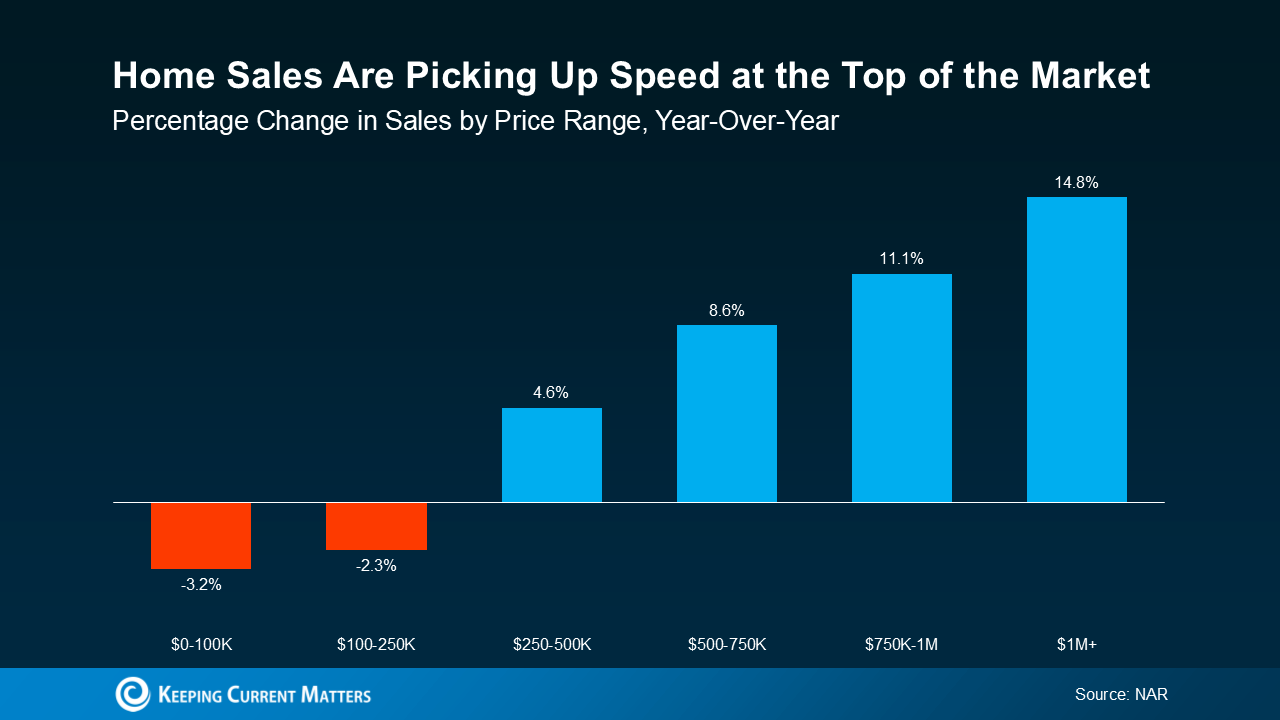 What’s behind the divide? Due to higher rates and the last few years of home price appreciation, fewer buyers can comfortably afford homes at the entry-level price point right now – especially first-time buyers. So, demand in that segment has slowed down.
On the flip side, buyers looking for higher-priced homes have less sensitivity to high-rate environments and more room in their budgets, thanks in part to a strong stock market and their equity in their current home.
That’s the real differentiator. Lower-priced homes are still selling, just not as quickly since today’s rates have shrunk the pool of buyers who can afford to buy their first place right now.
This is exactly why pricing strategy and presentation carry more weight than they used to, especially if you’re selling in that range. Price it right from the start instead of testing a high number, make sure it shows well online and in person, and lean on an agent who can get your listing in front of every buyer shopping in your range. That’s the best way to make sure you catch the attention of one of the buyers who are still looking – and it’s how you prove your home is worth it’s price.
How fast a home sells is shifting by price point too, and the split is just as sharp. For years, luxury homes sat on the market a lot longer than starter homes. That gap has nearly closed, according to Redfin (see chart below):
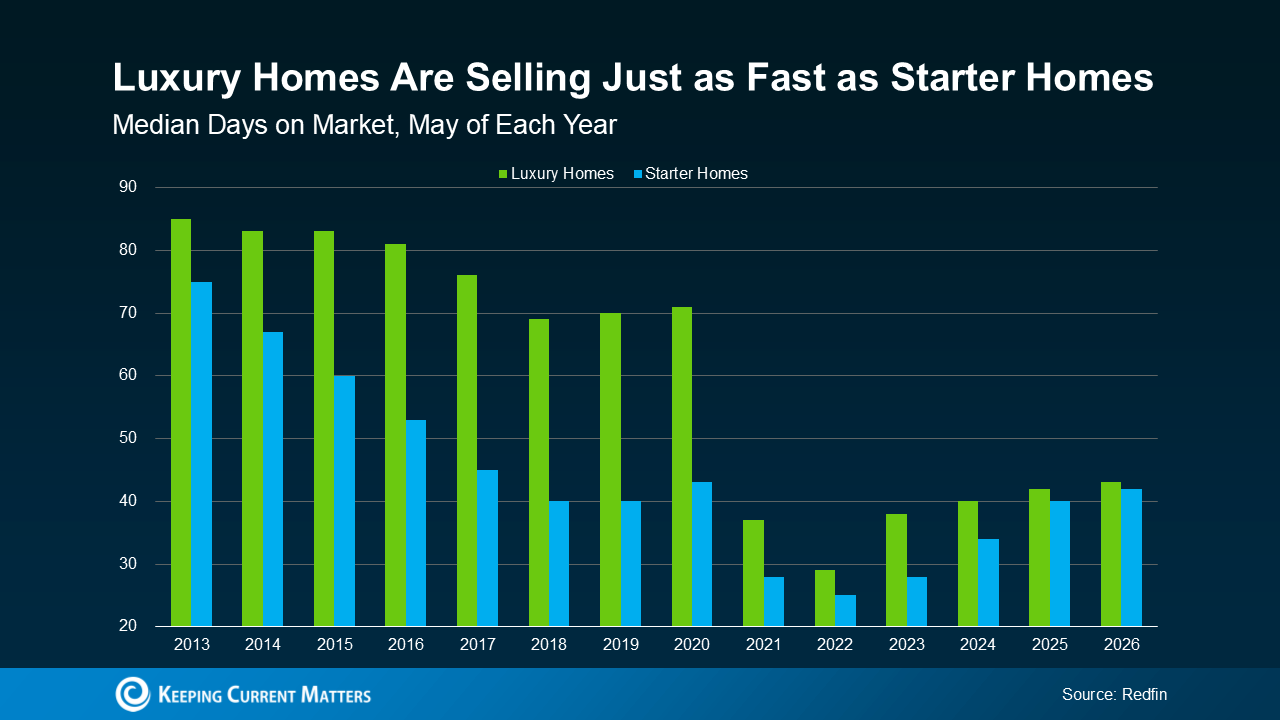 Buyers with deep pockets are moving fast when a well-priced home in their range comes up. As Zillow puts it:
“The U.S. housing market is splitting in two. Luxury homes are selling at a faster pace than a year ago, with shrinking supply and growing bidding wars.”
If you’re in that range, your house may sell faster than you’d expect. You may even get multiple offers. That kind of competition changes how a listing should be marketed and priced from day 1.
And no matter which side you’re on, that’s information you’re going to want up front if you want to have the smoothest sale possible.
If you’re thinking about selling an entry-level home, don’t panic. Homes at your price point are still selling, just at a slower pace than last year. That slower pace means pricing and presentation matter even more right now.
If you’re selling a move-up or luxury house, you’re in a good spot right now. Buyers looking in your price point usually aren’t as affected by today’s rates, so they’re more active, and good listings are drawing real competition.
Either way, your price point is the biggest factor in how fast your house sells and what it sells for.
Your home’s price point is the real story right now, more than anything you’re hearing in national headlines. Connect with a local real estate agent to map out exactly where your house fits in this split market and build a pricing strategy that gets you the speed and price you’re after.

Data centers probably weren’t on your list of things to think about when buying or selling a home.
School districts? Sure. How close you are to family? Absolutely. A large building full of computer servers down the road? Probably not.
But that may be changing.
Data centers are popping up in more communities across the country. And as they do, buyers and homeowners are starting to wonder what having one nearby could mean for everything from home values to utility bills. So, let’s get into what the data actually says. Because there’s a lot more nuance here than if they’re “good” or “bad.”
According to Realtor.com, back in 2015, only about a dozen ZIP codes had a large data center. But by the first half of 2026, that number had climbed to more than 100 – and it’s projected to rise even further by the end of the year (see graph below):
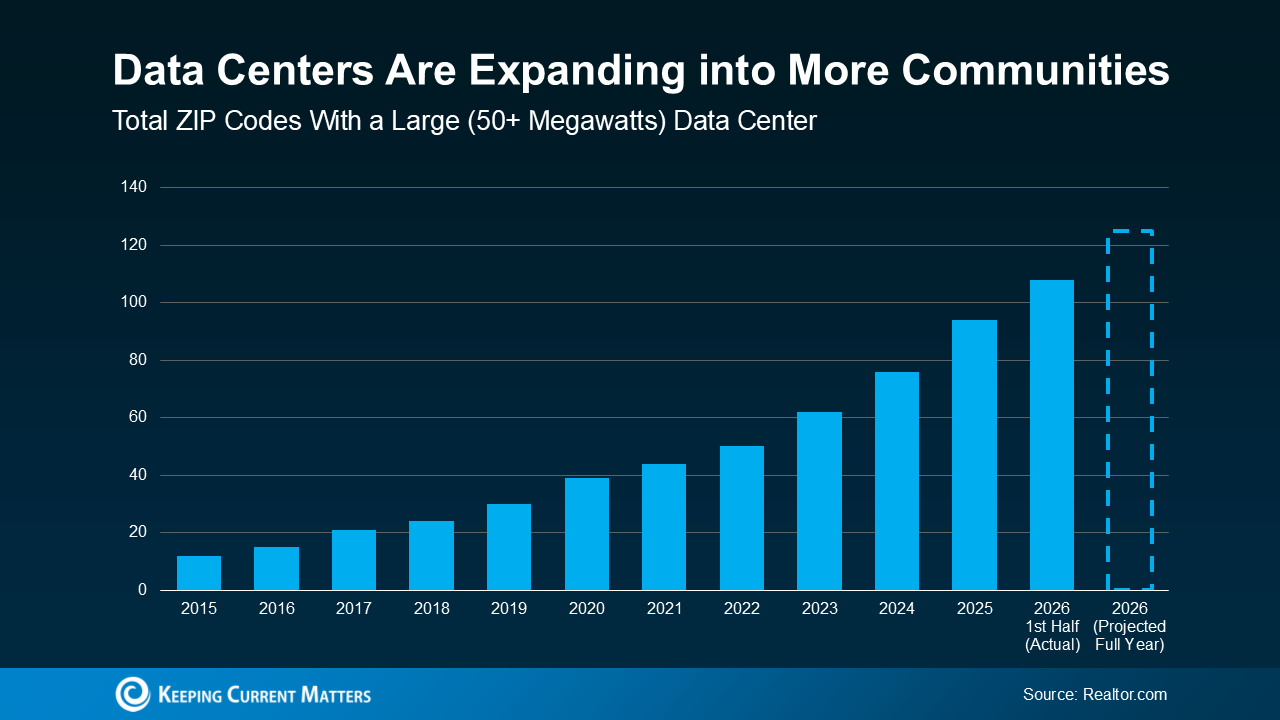 That’s a pretty dramatic increase in just over a decade. HousingWire shows a lot of that growth is in Texas, Virginia, Georgia, Pennsylvania, Ohio, Utah, Illinois, Arizona, Indiana, and Nevada.
And that ramp up explains why this is becoming a real estate conversation. More buyers are going to encounter a data center during their search. More homeowners are going to hear about one being proposed nearby.
And both groups are going to want to know what that could mean for them.
One of the first concerns homeowners and buyers may have is: could a nearby data center hurt home values? So far, there’s no evidence that says it automatically will.
Researchers compared communities that have large data centers to similar communities without them. A recent HousingWire article reports:
“. . . home values in data center ZIP codes generally tracked their matched communities — with no statistically meaningful gains or losses. Listing prices showed a modest initial increase around openings . . .”
That’s important context. Historically, simply having a data center nearby hasn’t been enough to send home values dramatically higher or lower.
That doesn’t mean every property will react the same way. Proximity, the surrounding development, and the specific facility can all matter. But for the typical homeowner or buyer, the data so far doesn’t point to an automatic impact on home values.
Like any major development coming to town, data centers can bring benefits along with things buyers and homeowners will want to consider.
On the plus side:
They may be part of a bigger growth story. A data center can usher in broader development in an area and substantial property tax revenue that can be used to improve the community.
Infrastructure may get an upgrade. New roads, fiber, power infrastructure, and other improvements can come along with major development.
They can generate economic activity. A data center can generate jobs which in turn fuels local housing demand and supports local businesses.
On the flip side:
They’re not exactly invisible. Large facilities, transmission lines, substations, and construction can change the look and feel of an area.
Noise can matter. Cooling equipment, generators, construction, and truck traffic may be noticeable depending on how close you are.
They use more resources. These facilities can require significant electricity and, depending on the cooling system, water. That can raise questions about local infrastructure and whether growing electricity demand could affect what residents pay.
On that last point, J.P. Blackwood, Public Affairs Liaison and Media Spokesperson for the Ohio Consumers’ Counsel (OCC), explained his take on what consumers need to know about data centers and their potential to impact utility costs to HousingWire:
“Utility rate increases tend to be gradual, and so that’s what I would expect here. Again, a number of factors can drive electricity prices higher and are driving them higher, and this is one of them. There are steps being taken around the country to mitigate the effects of data centers.”
Basically, they’re just one factor that can have an impact. And the key word there is “can” because it depends on where you live and what rules are in place in your area.
If you’re buying, find out what’s already there – and what’s approved or proposed nearby. Consider the facility’s proximity, potential noise, future development, and whether utility costs are something you want to factor into your budget.
If you’re selling, don’t assume a nearby data center automatically hurts your home’s value. But buyers may have questions. Knowing the facts about the facility, construction timeline, noise, and future plans can help you address those concerns upfront.
As more data centers pop up, they’re becoming another piece of the puzzle buyers and homeowners need to understand.
Have a data center nearby or one coming soon? Talk to a local real estate agent about what it could mean for your home or your next move.
AMD has officially launched the Ryzen 5 5500F and Ryzen 5 7500, two strong contenders for the best CPUs on the market if you’re on a budget. Both are hexa-core chips, with the Ryzen 5 5500F featuring AMD’s Zen 3 execution cores and the Ryzen 5 7500 using the newer Zen 4 execution cores. The Ryzen 5 5500F and Ryzen 5 7500, priced at $99 and $189, respectively, are available at U.S. retailers starting today.
Go deeper with TH Premium: CPU
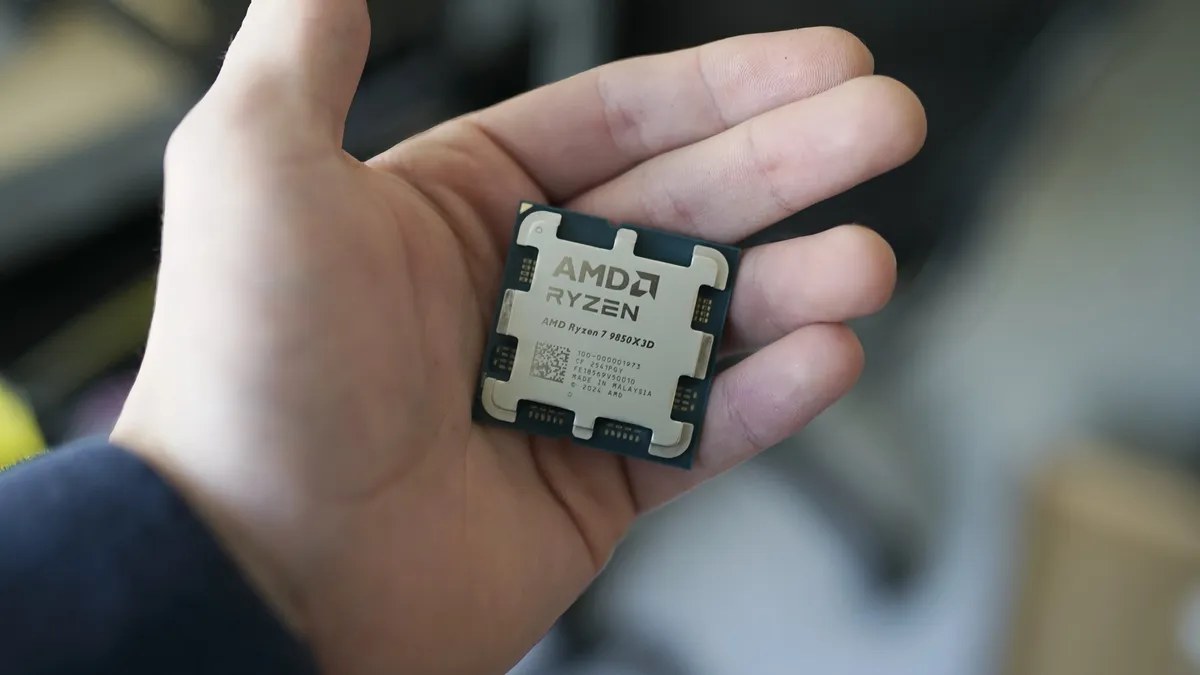
The Ryzen 5 5500F, despite its similar model name to the Ryzen 5 5500, belongs to a different family in AMD’s portfolio. The Ryzen 5 5500F hails from the Ryzen 5000 series (codenamed Vermeer), which uses a multi-chiplet architecture. Meanwhile, the Ryzen 5 5500 comes from the Ryzen 5000G series (codenamed Cezanne), which uses a monolithic die design.
Therefore, it is more sound to call the Ryzen 5 5500F a lower-binned version of the Ryzen 5 5600, rather than an iGPU-less variant of the Ryzen 5 5500, which lacks integrated graphics to begin with. The distinction matters because the Ryzen 5 5500F is close to the Ryzen 5 5600, albeit with a 500 MHz lower boost clock speed and half the L3 cache. The “F” suffix on the Ryzen 5 5500F is present because Vermeer does come with integrated graphics, so AMD uses it to explicitly indicate the absence of this feature.
Latest Videos FromTom’s Hardware
The Ryzen 5 5600, which launched at $199, now retails for around $159, making the new Ryzen 5 5500F approximately 38% more affordable. Meanwhile, the Ryzen 5 5500, which debuted at $159, has lost substantial value over the years. OEM tray versions of the Ryzen 5 5500 now start at just $74, so it is still the most cost-effective entry point into the AM4 ecosystem. Compared to the Ryzen 5 5500, the Ryzen 5 5500F carries a 34% price premium. The latter justifies its higher cost with a slightly higher boost clock speed, which translates to better gaming performance, and support for PCIe 4.0, unlocking faster SSDs and graphics cards.
|
Processor |
MSRP / Current Price |
Architecture / Codename |
Platform |
Cores / Threads |
Base / Boost Clock (GHz) |
L2 Cache (MB) |
L3 Cache (MB) |
Graphics Model |
Graphics Core |
Graphics Frequency (MHz) |
Memory Support |
PCIe Lanes |
TDP (W) |
|---|---|---|---|---|---|---|---|---|---|---|---|---|---|
|
Ryzen 5 7600 |
$229 / $226 |
Zen 4 / Raphael |
AM5 |
6 / 12 |
3.8 / 5.1 |
6 |
32 |
AMD Radeon |
2 |
2,200 |
DDR5-5200 |
24 PCIe 5.0 |
65 |
|
Ryzen 5 7500 |
$189 / $189 |
Zen 4 / Raphael |
AM5 |
6 / 12 |
3.7 / 5.0 |
6 |
32 |
AMD Radeon |
2 |
2,200 |
DDR5-5200 |
24 PCIe 5.0 |
65 |
|
Ryzen 5 7500F |
$179 / $157 |
Zen 4 / Raphael |
AM5 |
6 / 12 |
3.7 / 5.0 |
6 |
32 |
N/A |
N/A |
N/A |
DDR5-5200 |
24 PCIe 5.0 |
65 |
|
Ryzen 5 5600 |
$199 / $159 |
Zen 3 / Vermeer |
AM4 |
6 / 12 |
3.5 / 4.4 |
3 |
32 |
N/A |
N/A |
N/A |
DDR4-3200 |
20 PCIe 4.0 |
65 |
|
Ryzen 5 5500F |
$99 / $99 |
Zen 3 / Vermeer |
AM4 |
6 / 12 |
3.0 / 4.4 |
3 |
16 |
N/A |
N/A |
N/A |
DDR4-3200 |
20 PCIe 4.0 |
65 |
|
Ryzen 5 5500 |
$159 / $74 |
Zen 3 / Cezanne |
AM4 |
6 / 12 |
3.6 / 4.2 |
3 |
16 |
N/A |
N/A |
N/A |
DDR4-3200 |
20 PCIe 3.0 |
65 |
When it comes to the Ryzen 5 7500, little mystery surrounds its place in AMD’s product stack. True to its name, the Ryzen 5 7500 is the same processor as the Ryzen 5 7500F, which launched three years ago, but with integrated Radeon graphics. This small addition suits users who need basic display output and do not plan to spend money on a discrete graphics card. Apart from the integrated graphics, all core specifications remain identical between the two models.
As a result, the difference between the Ryzen 5 7600 and the Ryzen 5 7500 stands. The former boasts a 100 MHz higher base and boost clock, so performance is somewhat better in certain processor-intensive workloads or gaming scenarios. However, most users may not notice the difference.
The Ryzen 5 7500F hit the market at $179, but over time its retail price has dropped to about $157. In contrast, the Ryzen 5 7600 has held its value over the years, falling only slightly from its original MSRP of $229 to around $226. As a result, the Ryzen 5 7500 positions itself as a mid-point option, priced 16% lower than the Ryzen 5 7600 and 20% above the Ryzen 5 7500F.
The Ryzen 5 7500 makes sense in this market because not everyone is a gamer, so integrated graphics mean you do not have to spend a fortune on a discrete graphics card at today’s ridiculous prices. However, because it runs on AMD’s AM5 platform, the Ryzen 5 7500 is still bound by the sky-high cost of DDR5.
Follow Tom’s Hardware on Google News, or add us as a preferred source, to get our latest news, analysis, & reviews in your feeds.
Housing lottery applications are open for 227 rent-stabilized apartments at a new development in Mott Haven in the Bronx. Households that earn $73,783 to $238,160 are eligible to apply, depending on the number of people you live with. Rents start at $1,936 for a one bedroom.
The 40-story building at 355 Exterior St. has a pool, gym, roof terrace, pet spa, indoor pickleball court, and golf simulator. One River Park, named for its location next to the Harlem River, allows one pet with a weight limit of 30 pounds.
Developed by Beitel Group, the development has access to the 2, 4, and 5 trains at the nearby 149th Street-Grand Concourse subway station.
The apartments are set aside for New Yorkers earning from 70 to 130 percent of the area median income (AMI)—a metric that depends on how many people you live with. Currently the AMI for New York City is $129,600 for a two-person household. The available units include studios as well as one-, two-, and three-bedroom apartments.
There are 91 one-bedroom units available for households earning from $91,475 to $198,510. The rent for these apartments is $2,600.
Applications must be submitted online or postmarked no later than Sept. 24th.
If you’re interested and think you might qualify for one of these apartments, you can create a profile and apply online via NYC Housing Connect. For details on this particular lottery, click here. Don’t apply more than once, or you could be disqualified.
Winning a rent-stabilized apartment can be life changing: Rent increases are capped and lease renewals are automatic, providing long-term stability for NYC renters. Need more information on how the housing lottery works? Check out “6 steps for applying to NYC’s affordable housing lottery.”
For some advice from successful applicants read “How to land a rental apartment through NYC’s affordable housing lottery.” And if you or someone you know is having trouble with the application process, consider reaching out to a housing ambassador in the community.
Note: Brick Underground is in no way affiliated with New York City’s Department of Housing Preservation and Development or the Housing Development Corporation. If you are interested in applying to these or other affordable housing developments, please go to NYC Housing Connect for information and instructions.
Have you successfully won an apartment through the affordable housing lottery? If you have first-person advice to share about the process, we’d love to hear from you. Please send us an email. We respect all requests for anonymity.